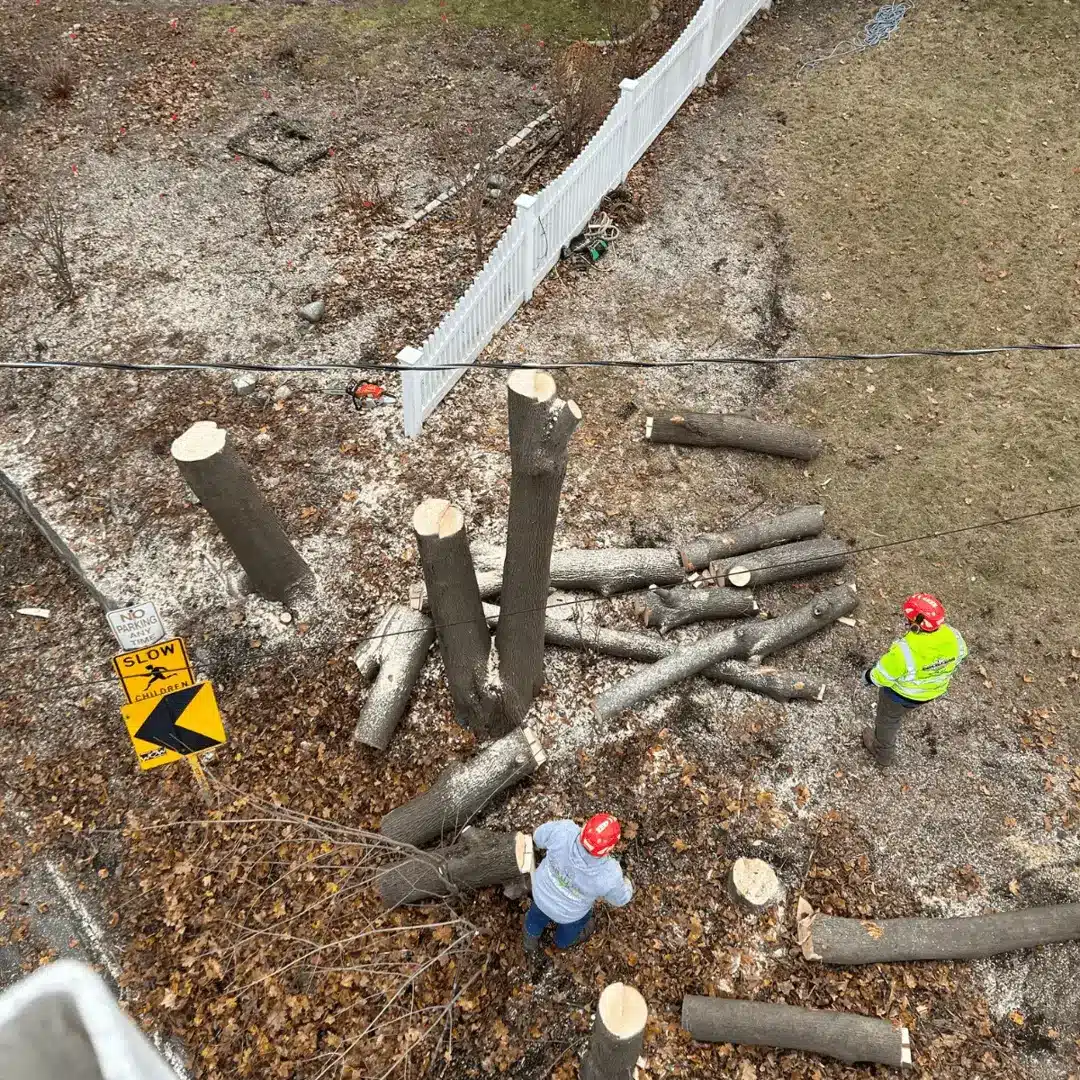
A tree cut down service is a professional operation that safely removes hazardous, dying, or unwanted trees from your property — and asking the right questions before work begins can save you serious money, stress, and liability.
Here’s what to look for and ask before hiring a tree removal company:
If a tree just came down in your backyard during a storm, or you’ve got a 60-foot oak leaning toward your roof, you don’t have time to guess. Tree removal is genuinely dangerous work — the kind where mistakes can mean a crushed fence, a damaged roof, or worse.
According to industry safety standards, tree service work is among the most hazardous trades without proper training, equipment, and insurance. Yet many homeowners hire the first crew that shows up, without asking a single question.
This guide changes that. You’ll know exactly what to ask — and what to watch out for — before a single chainsaw starts.

Quick tree cut down service definitions:

Every tree on your property is either an asset or a liability. While we love the shade and character they provide to our Massachusetts landscapes, a tree that has lost its structural integrity becomes a ticking time bomb. Recognizing the difference between a tree that needs a “haircut” and one that requires a full tree cut down service is the first step in property protection.
Professional hazard assessment isn’t just about looking at the leaves. We look at the “bones” of the tree. If a tree is leaning precariously toward your home or a neighbor’s fence, the risk of failure increases every time we get a heavy New England snow or a summer thunderstorm. Furthermore, pest infestations—like the Emerald Ash Borer or various wood-boring beetles—can hollow out a trunk from the inside, leaving it standing only by a thin shell of bark.
For homeowners in areas like Arlington, it is vital to stay informed on local Tree Maintenance Information | Town of Arlington to understand your responsibilities regarding public and private trees. If you suspect a tree has become a danger, you can find more info about tree removal services to help guide your next steps.
How do you know if your tree is truly “sick”? Some signs are subtle, while others are screaming for attention.
If you aren’t sure, don’t guess. Is your tree sick? Here is the cost for a professional inspection to get a definitive answer from an expert.
In Massachusetts, we are no strangers to “Nor’easters” and sudden ice storms. When nature attacks, the aftermath can be overwhelming. Saturated soil from heavy rains can cause even healthy, mature evergreens to uproot because the ground simply can’t hold them anymore.
Hazardous limbs hanging over power lines or resting on your roof require immediate, specialized attention. Attempting to move these yourself is incredibly dangerous due to the tension in the wood and the proximity to live electricity. If you find yourself in the middle of a landscape crisis, check out need help now: your guide to 24 hour emergency tree service for rapid response protocols.
One of the most common questions we hear is: “How much is this going to cost?” Because every job involves different risks, sizes, and equipment, there isn’t a one-size-fits-all price tag. The pricing referenced here is based on general internet research and national averages, and does not imply that Zacarias Tree & Landscaping charges these specific rates. Costs vary depending on property conditions, access, materials, scope, and site complexity. For a deeper dive into the math, see our guide on how much does it cost to cut down a tree?
While every property is unique, here are the general price ranges you might see in the market based on national research. These are broad estimates and the high end can often be 3x the lower end depending on complexity:
The complexity of the job scales quickly with height. You can learn more about scaling the costs of 60 foot tree removal to understand why these giants require more manpower and specialized gear. To get an accurate price for your specific project, we recommend requesting a free on-site estimate.
Beyond just the size of the wood, several logistical factors will shape your final estimate:
Before you sign a contract, make sure you follow a step by step guide to tree removal quotes to ensure you understand the full scope of the work being proposed.
Tree removal is a high-stakes profession. At Zacarias Tree & Landscaping, we emphasize that safety is not an “extra”it is the foundation of everything we do. Professional operations strictly adhere to OSHA guidelines and ANSI A300 standards, which are the industry-accepted practices for tree care and maintenance.
Working with a qualified, insured tree care professional helps ensure proper rigginga system of ropes and pulleysis used to lower heavy limbs slowly and precisely, rather than just letting them drop. This technical approach is essential for protecting your home and ensuring a safe work environment.
In many Massachusetts towns, houses are built close together, and backyards are often inaccessible to traditional bucket trucks. This is where crane-assisted removal becomes a game-changer. By using a crane, we can “pick” sections of a tree from the backyard and lift them over the roof to the street.
This method is often safer for our crews and significantly reduces the impact on your lawn. No heavy trucks driving over your grass means no ruts or damaged irrigation systems. Its an efficient, high-tech solution for high-risk trees. Learn more about branching out with professional crane tree removal techniques and how they might apply to your property.
This is the most critical part of your hiring process: Insurance.
Always ask for a current certificate of insurance sent directly from the agency to you. Be cautious with unusually low estimates, since they may not reflect the full level of coverage, equipment, or scope your project requires. For more context, read Dont get stumped by tree arborist cost estimates before making a decision.
The job isn’t done just because the tree is on the ground. A professional tree cut down service should leave your property looking better than they found it. This involves managing the massive amount of debris that a single mature tree can produce.
When we finish a removal, you’re usually left with three things: a stump, a pile of logs, and a mountain of small branches (brush). Deciding how to handle these ahead of time is key to getting your yard back with professional downed tree removal.
Unless specified, most tree removals leave a stump a few inches above the ground. You have two main options for what happens next:
Stumps left in the ground can attract termites, carpenter ants, and other pests, so grinding is generally the recommended choice for residential Tree Services.
What happens to the tree once it’s cut?
We take environmental responsibility seriously. Whether it’s emergency work or routine maintenance, we aim to recycle as much of the organic material as possible. For more on how we handle the aftermath of a storm, see the grounded truth a guide to emergency fallen tree removal.
While we provide tree cut down service year-round, the “dormant season” (late fall through early spring) is often ideal. When the leaves are gone, the tree is lighter and easier to handle. Furthermore, the frozen ground in a Massachusetts winter provides an extra layer of protection for your lawn against heavy equipment. However, if a tree is hazardous, the best time to remove it is immediately, regardless of the season.
It depends on your specific town. Many Massachusetts municipalities have “Public Shade Tree” laws that protect trees near the roadway. Others have strict Conservation Commission rules if the tree is near a wetland or “Historical District” regulations that govern what you can do on your property. We always recommend checking with your local town hall or building department before starting a major removal.
Absolutely! Not every sick tree needs to come down. An expert assessment might reveal that your tree just needs “structural pruning” to remove weight from heavy limbs or “soil aeration” to help the roots breathe. At Zacarias Tree & Landscaping, we love trees and only recommend removal when it is the safest or most logical path forward. Explore our Tree Trimming / Pruning services to see if preservation is an option for you.
Hiring a tree cut down service is a major decision for any homeowner. From the initial hazard assessment to the final stump grinding, every step requires precision, the right equipment, and a commitment to safety.
At Zacarias Tree & Landscaping, we take pride in serving our neighbors throughout Massachusetts—from the historic streets of Cambridge and Concord to the coastal yards of Salem and Gloucester. Our mission is to provide rapid response, quick estimates, and a level of cleanup that makes it look like we were never there. Whether you are dealing with storm damage or simply want to improve your property’s curb appeal, we are here to help.
Don’t wait for the next big storm to find out if your trees are safe. Schedule your professional tree removal today and let our expert team give you the peace of mind you deserve.
Need a pro? Zacarias Tree & Landscaping provides licensed, insured, and expert care across Lynn, Essex, and Middlesex Counties.
We live by a simple promise: Clear scope. Clear plan. Clean finish.
From emergency removals to seasonal landscaping, we’ve been Lynn’s trusted choice since 2002. Safety-first standards. Total site cleanup. Every time.