Skip to content
Proudly Servicing Essex & Middlesex Counties and Beyond 24/7 Emergency Tree Services
Grading & Drainage

Send the Water Where It Belongs

Grading, French drains, catch basins, and swales that move water away from your home — for properties across Lynn, the North Shore, and Essex & Middlesex Counties.

Fixing the Cause, Not Just the Symptom

Water is the single biggest threat to a New England property. A yard that puddles after every storm, a basement that seeps in spring, a lawn that stays soggy into summer — these aren’t cosmetic problems. Left alone, poor drainage undermines foundations and drowns lawns.

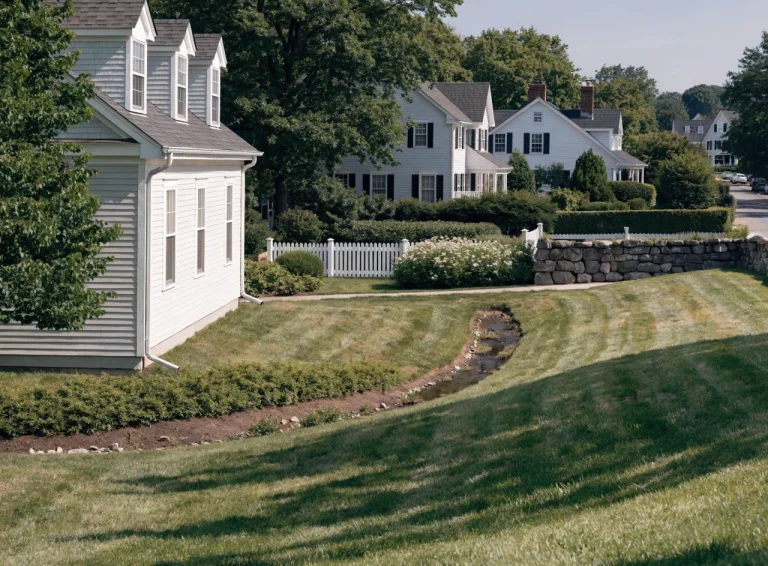
Grading and drainage work solves the problem at its source. Grading means shaping the ground so water runs away from your home instead of toward it. Drainage means giving that water a clear, managed path to a safe outlet. Get both right and standing water, erosion, and wet basements stop being a yearly headache.

Zacarias Tree & Landscaping has served Lynn and the North Shore since 2002. We’re licensed, bonded, and fully insured, and we bring the same contractor’s mindset to drainage as to every job: find where the water comes from, plan a clear fix, leave the site clean.

Fixing the Cause, Not Just the Symptom
Grading That Sends Water Where It Should Go
20+Years of local projects
Solve Water Problems

Grading That Sends Water Where It Should Go

Standing water and runoff damage lawns and foundations. We regrade and shape the ground to move water away.

  • Corrects pooling & runoff
  • Protects lawns & foundations
  • Licensed, Bonded & Fully Insured

How Zacarias Approaches a Drainage Problem

No two wet yards are the same, so we don’t sell a one-size-fits-all pipe. We start with your specific property, then match the solution to the problem.

  • We walk the property with you. We identify where the water is coming from and where it should go — roof runoff, a high neighboring lot, a low spot that never drains, or a downspout dumping at the foundation.
  • We outline a clear scope. You get the priorities, the plan, and realistic scheduling before work starts — no surprises.
  • We install it to last. Depending on the fix, that means the right aggregate (crushed stone), separation fabric where the soil calls for it, and access points so the system can be maintained later.
  • We clean up completely. Trenching and grading are disruptive by nature, so we restore the surface and leave the property looking finished, not torn up.

Our work follows proven drainage practices — properly compacted bases, the right aggregate and separation fabric, and sound stormwater fundamentals for managing runoff responsibly.

The Solutions We Install

Most drainage jobs use one method or a combination of a few. Here’s what each one does and when it makes sense:

  • Surface grading & yard regrading. Reshaping the slope of the land so water sheds away from the house. Often the first and most important fix — you can’t out-pipe a yard that slopes the wrong way.
  • French drains. A gravel-filled trench with perforated pipe that intercepts groundwater and subsurface water, carrying it to a safe outlet. The go-to for soggy lawns and water migrating toward a foundation.
  • Catch basins. A collection point that captures surface water from a low spot and ties it into a drainage line — ideal for the one corner that always ponds.
  • Swales. A shallow, graded channel — often planted — that guides runoff along a controlled path instead of letting it sheet everywhere.
  • Downspout routing & discharge management. Getting roof water out from against the foundation and carried well away from the house, where it belongs.
  • Site preparation for hardscapes. Base grading and drainage before a patio or walkway goes in, so the surface doesn’t heave or shift.

The right combination depends on your soil, your grade, and where the water comes from — which is what the site visit is for.

What Affects the Cost and Timeline

Every drainage project is priced to the property, so we don’t quote numbers online. But a few factors drive both cost and timeline, and it helps to understand them going in:

  • The size of the problem. A single downspout re-route is a very different job from regrading a whole backyard or a long French drain run.
  • How far the water has to travel. The distance to a safe outlet — and whether one already exists — affects trenching and materials.
  • Soil and access. Heavy clay, ledge, or a tight backyard with no equipment access all add labor, and some soils need more fabric and aggregate than others.
  • Whether it’s tied to another project. Drainage bundled with a new patio or a bed renovation is often more efficient than a standalone visit, because the site is already open. Restoring the lawn or beds afterward is always part of the scope.

Timeline depends on scale and weather — a focused fix can be a day or two, while a full regrade takes longer. And because water damage only gets worse, our 24/7 emergency response can help with an active problem before the full fix is scheduled.

Practical Fixes That Actually Work
1,500+Local jobs completed
Drainage Done Right

Practical Fixes That Actually Work

From swales to buried drains, we install drainage that handles New England's heavy rain and snowmelt.

  • Swales & subsurface drainage
  • Complete cleanup on completion
  • Free on-site estimates
Grading & Drainage FAQs

Common Drainage Questions, Answered

Do I need a French drain or a catch basin?

It depends on the water. A French drain intercepts water moving through the soil — the fix for a lawn that's soggy across a whole area or water migrating toward a foundation. A catch basin captures surface water pooling in one low spot. Many properties use both, and we'll tell you which after walking the site.

Can grading and drainage fix water getting into my basement?

Often, yes — when the cause is outside. A lot of wet basements come down to water pooling against the foundation because the ground slopes the wrong way or a downspout discharges right at the wall. Regrading and rerouting that water is frequently the missing piece, and we'll assess whether the source is something we can correct from the exterior.

Why does my yard have standing water after every rain?

Usually one of a few things: the ground slopes toward a low spot instead of away, the soil is heavy and drains slowly, or roof and driveway runoff has nowhere to go. Grading corrects the slope; a French drain, catch basin, or swale gives the water a managed path out.

Will drainage work tear up my whole lawn?

Trenching and grading are disruptive while the work is happening, but restoring the site is part of the job. We plan access to minimize damage, and we finish by putting the surface back so the property looks clean — not left torn up.

Can you handle drainage before you build my patio or walkway?

Yes, and it's the right way to do it. Proper base grading and drainage under a hardscape keeps the surface from heaving or shifting. When a job calls for it, our grading crew coordinates directly with our hardscaping work so the drainage and the finished surface are planned together.

How soon can you come look at the problem?

We provide free estimates and will schedule a site visit to walk the property with you. If you're dealing with an active water problem, our 24/7 emergency response can help while the full fix is scheduled.

Stop Fighting the Same Wet Spot Every Year

Get a free, no-obligation site visit from Lynn's trusted local crew — we'll find where the water is coming from and give you a clear plan to fix it. Explore our full range of landscaping services, see how drainage ties into our hardscaping work, or check our service area across Lynn and the North Shore.