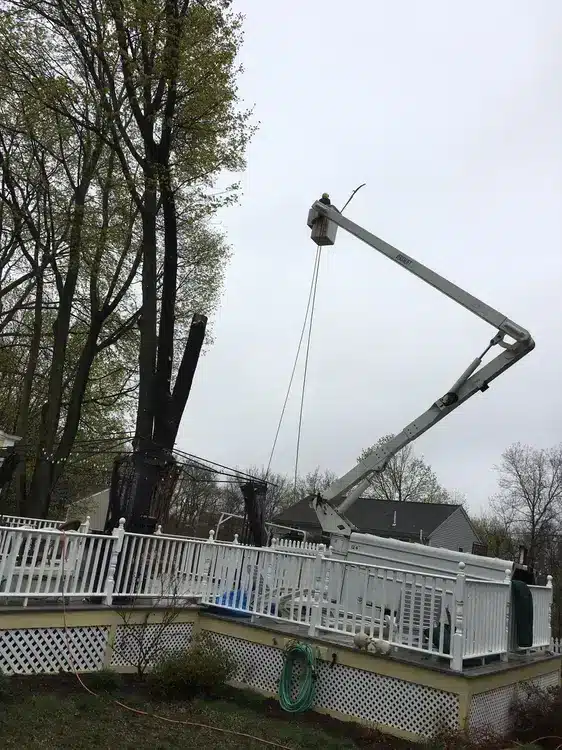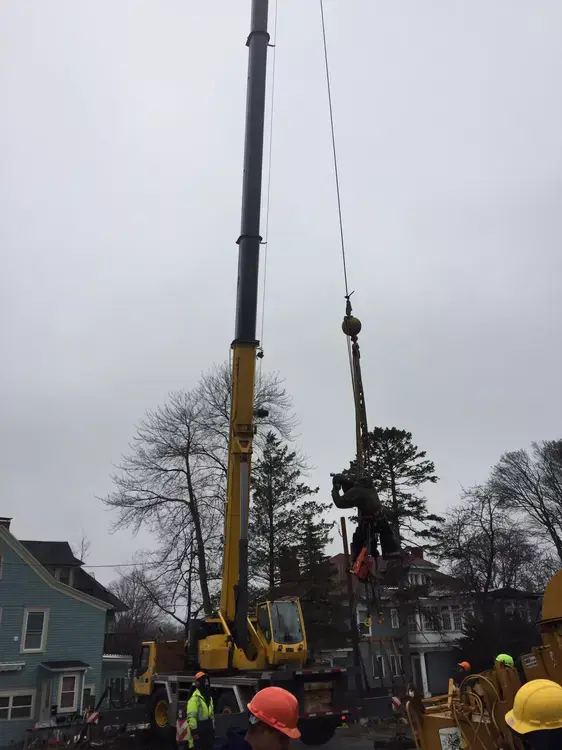
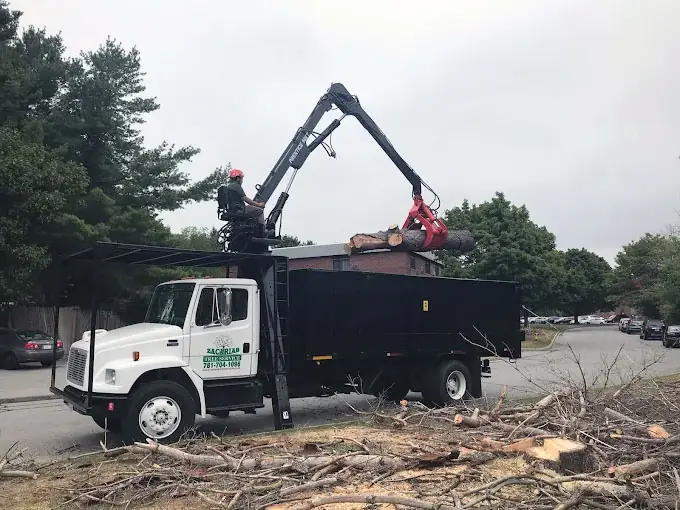
When a tree is too large, too close to a roof, or positioned over wires and tight access areas, a standard takedown can create avoidable risk. Crane-Assisted Tree Removal is built for these scenarios—lifting heavy sections out in a controlled way instead of letting gravity decide where they land. It’s the right fit for homeowners, property managers, and commercial sites that need a precise plan, not a “we’ll try to rig it” approach.
Zacarias Tree and Landscaping, Inc. coordinates the lift plan, crew positioning, and cleanup so your property stays protected and the job stays on schedule. During a site visit we’ll confirm access, identify hazards, and outline a clear scope and budget range before equipment is dispatched—because crane time is valuable and windows for safe work can be limited in busy seasons. If you’re ready to move forward, Get a Quote.
Crane-Assisted Tree Removal is ideal when the tree can’t be safely dropped in pieces because of targets below—homes, garages, pools, fences, patios, landscaped beds, or active driveways. It’s also a smart choice for storm-damaged trees, trees leaning over a roofline, and removals where bucket access is limited by setbacks or soft ground.
A crane isn’t automatically the answer for every removal. If the site can’t support crane setup, if overhead obstructions prevent safe boom positioning, or if the tree’s condition makes picking unsafe without additional rigging strategy, we’ll recommend a different approach. Our goal is the same either way: a controlled removal that protects people, structures, and the surrounding landscape. If you’re comparing options, our broader Tree Services coverage can help you choose the right method without overpaying for equipment you don’t need.
Crane work demands more than “tree experience.” We’re fully licensed and insured, and we bring an experienced crew that understands how to work around structures, utilities, and tight residential access. We’re familiar with the regional mix of mature trees and weather swings that can turn a compromised canopy into a time-sensitive hazard, so we plan for changing conditions instead of reacting to them mid-lift. Our equipment coordination focuses on stable setup, clear communication, and a sequencing plan that keeps the pick predictable from first cut to final load-out.
Safety is not improvised: we align jobsite practices with industry guidance like OSHA crane safety standards and use established arborist work practices such as those reflected by the Tree Care Industry Association. For a closer look at how we think about hazard control and jobsite expectations, review our Safety Standards page.
Crane-Assisted Tree Removal works best when the lift plan is built around the site—not forced onto it. Here’s how we typically run a crane removal so the work stays efficient and the property stays protected.
If you’d like to see the quality of our finished sites, visit our Projects gallery and read client feedback on Testimonials.
To lock in crane availability and get a clear scope in writing, schedule your site visit here: Get a Quote.
Need a pro? Zacarias Tree & Landscaping provides licensed, insured, and expert care across Lynn, Essex, and Middlesex Counties.
We live by a simple promise: Clear scope. Clear plan. Clean finish.
From emergency removals to seasonal landscaping, we’ve been Lynn’s trusted choice since 2002. Safety-first standards. Total site cleanup. Every time.

Crane-Assisted Tree Removal starts with a walkthrough that answers the practical questions: Where will the crane set up? What needs protection? How will debris be handled? What’s included in cleanup? We’ll confirm the safest approach, explain the planned sequence, and provide a clear written scope so you can approve the work with confidence—no-pressure, no guesswork.
Scheduling matters because crane coordination and weather windows can tighten during peak seasons. If you have a tree leaning over a roof, hanging limbs over a driveway, or a removal that can’t be safely dropped, now is the time to reserve the right equipment and crew.
If the tree is over a home, garage, pool, or wires—or there’s no safe drop zone—a crane may be the safest way to control the pieces. Limited access for bucket trucks and severe lean or storm damage are also common reasons. We confirm feasibility during the site visit by checking setup space, overhead clearance, and the tree’s condition.
We walk the property to confirm crane access, identify targets to protect, and plan where material will be staged and removed. You’ll get a clear scope of work, expectations for cleanup, and a realistic schedule based on equipment coordination. We’ll also discuss options like stump grinding or restoration if you want the area finished out.
Often, yes—because it involves specialized equipment, coordination, and a larger operational footprint. That said, it can reduce labor time and lower the risk of property damage in tight, high-stakes situations, which can make it the most cost-effective choice overall. After we see the site, we’ll explain the options so you can choose the right level of control.
Any heavy equipment can leave an impact if conditions are soft, but planning and protection make a big difference. We evaluate ground conditions, choose the best setup location, and use protective measures where appropriate to reduce rutting and surface damage. The crane method can also reduce dragging and traffic across turf because sections can be lifted directly to a landing zone.
Sometimes, but it depends on the tree’s structural integrity and whether safe pick points exist. Storm damage and decay can change how the tree must be rigged and how pieces are sized for control. We’ll assess the risk on site and recommend the safest method, which may include stabilization steps before lifting.
Requirements vary by site and proximity to public ways or utilities. During the evaluation, we’ll flag any likely coordination needs—such as access constraints or overhead utility considerations—and explain what’s required before scheduling. Our goal is to prevent day-of delays and keep the removal moving smoothly.