
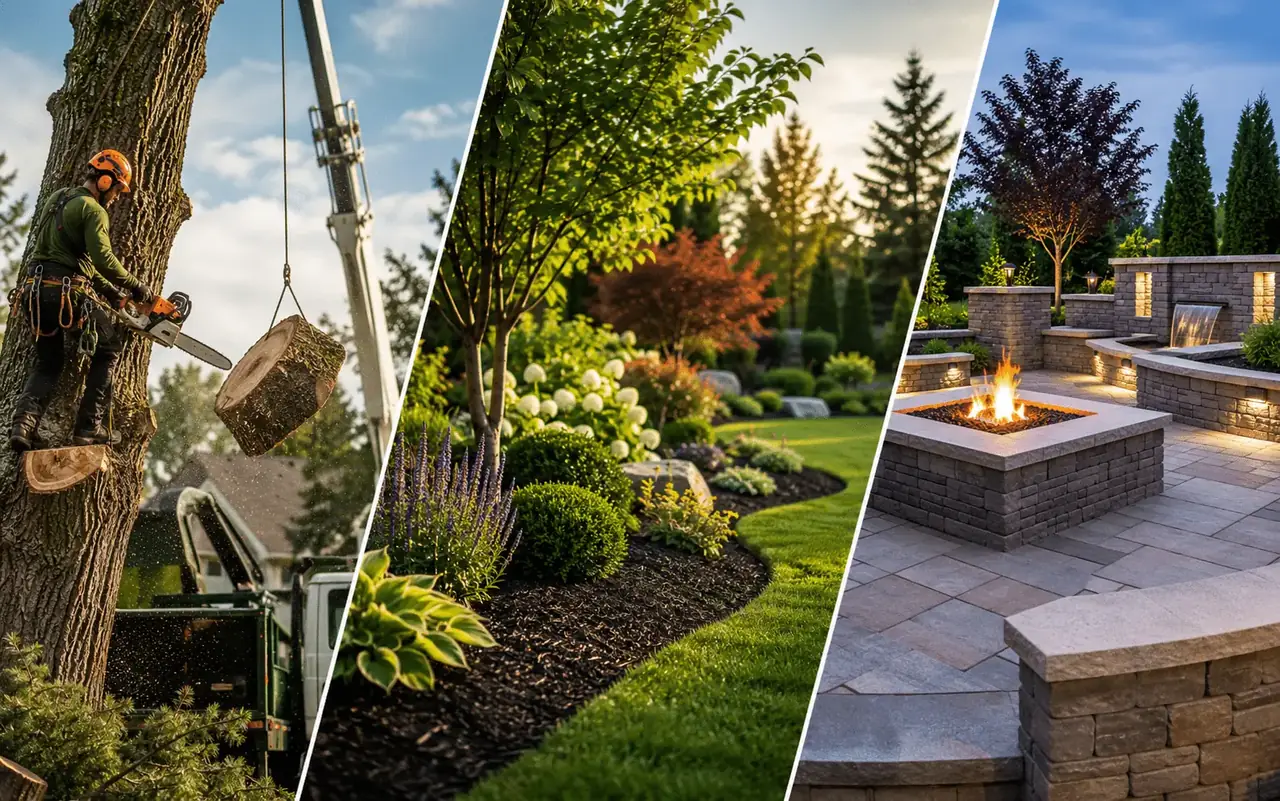
The cost to get trees cut down typically ranges from $200 to $3,000+ per tree, with most homeowners paying between $400 and $1,200. Here’s a quick snapshot based on general national averages:
| Tree Size | Typical Height | Average Cost Range |
|---|---|---|
| Small | Up to 30 ft | $200 – $500 |
| Medium | 30 – 60 ft | $450 – $1,200 |
| Large | 60 – 80 ft | $800 – $1,500 |
| Extra-Large | 80+ ft | $1,000 – $3,000+ |
| Emergency Removal | Any size | $1,475 – $5,000 |
Note: These figures are based on general internet research and national averages. Actual costs vary significantly based on your property, tree condition, site access, and local factors. Always request a free on-site estimate for accurate pricing.
That tree in your backyard — the one leaning after last week’s storm — isn’t going to move itself. And if you’ve been searching for a straight answer on what removal will actually cost you, you’re not alone.
Tree removal pricing can feel all over the place. A simple small tree might run a few hundred dollars. A large storm-damaged oak close to your house? You could be looking at several thousand. The difference comes down to a handful of key factors — size, species, condition, access, and whether the job is an emergency.
This guide breaks down exactly what drives the price, so you know what to expect before a single chainsaw starts.

When we look at the big picture, the national average for professional tree removal sits around $750 to $850, but as any homeowner in Massachusetts knows, averages only tell half the story. In our experience operating across the North Shore and Greater Boston area, from the historic streets of Salem to the wooded lots of Concord, the cost to get trees cut down is rarely “average.”
The total price on your invoice represents more than just the act of cutting. It includes the labor of a skilled crew, the use of specialized machinery, insurance coverage to protect your property, and the logistical challenge of disposing of tons of wood. For a deeper dive into the basics, you can check out our Beginner’s Guide to Tree Service & Removal Cost.
To help you budget, here is a breakdown of how height generally influences the price you might see on a quote:
| Tree Category | Height Range | Estimated Price Range |
|---|---|---|
| Small | Under 30 feet | $200 – $500 |
| Medium | 30 – 60 feet | $450 – $1,200 |
| Large | 60 – 80 feet | $800 – $1,500 |
| Extra-Large | Over 80 feet | $1,500 – $3,000+ |
Size is the single most significant factor in determining your estimate. It isn’t just about how tall the tree is, but also how much “mass” needs to be managed.
Beyond height, we also look at the trunk diameter. A tree that is short but incredibly wide (thick DBH – Diameter at Breast Height) requires more “bucking” (cutting the trunk into manageable logs), which adds to the labor time.
Not all wood is created equal. The species of the tree dictates how heavy the wood is and how the branches are structured, both of which affect the cost to get trees cut down.
While size and species provide the baseline, several “real-world” factors can push a quote up or down.
Tree Health: This is a bit of a catch-22. You might think a dead tree is easier to cut because it’s lighter. In reality, tree health is a major safety variable. Dead or diseased trees are unpredictable. They can’t always be climbed safely because the wood might snap, forcing us to use a bucket truck or crane, which adds to the cost.
Accessibility: Can we get our equipment right up to the tree? If the tree is in a wide-open backyard in Andover, the job is simpler. If we have to carry logs by hand through a narrow gate in a tight Cambridge alley, the labor hours will climb. Accessibility challenges can add 25% to 50% to the total price.
Massachusetts Specifics: Our local climate plays a role too. Winter removals can sometimes be slightly more affordable because the ground is frozen (protecting your lawn from heavy equipment) and the trees are dormant. However, storm cleanup during our volatile “Nor’easter” season often comes with premium pricing due to the high demand and hazardous conditions. Proper Tree Trimming & Pruning throughout the year can often prevent the need for these expensive emergency removals.
If a tree has already fallen on your house, car, or is leaning precariously over a power line after a storm, you are looking at an emergency situation. Emergency tree removal costs are significantly higher than standard removals, often ranging from $1,500 to $5,000+.
The increased cost reflects the immediate response, the higher risk to the crew, and often the need for specialized equipment like cranes to lift a tree off a structure without causing further damage. We recommend reading our Emergency Tree Removal: The Homeowner’s 24-Hour Survival Guide to understand how to handle these stressful moments.
The silver lining? If a tree falls due to a “covered peril” (like a windstorm) and damages a structure, your homeowners insurance may cover a portion of the removal cost, typically up to $500 or $1,000 per tree. Check our Emergency Tree Service page for more on how we assist with these urgent needs.
A standard quote usually covers the “felling” and “bucking” of the tree. However, most homeowners want more than just a pile of logs in their yard. Additional services include:
We get it — when you see a quote for $1,200, the idea of renting a chainsaw for $60 and doing it yourself becomes very tempting. However, tree removal is one of the most dangerous home maintenance tasks there is.
For a detailed look at why pros are the safer bet, see our Tree Removal service page.
While you might be able to handle a small sapling or some light pruning on your own, you should always hire a professional arborist if:
Scientific reports on vegetation management emphasize that professional intervention is significantly more “cost-efficient” in the long run. A professional crew can do in two hours what might take a homeowner two weekends, and we do it without the risk of a trip to the ER or a call to the insurance adjuster.
In many Massachusetts towns — such as Arlington, Cambridge, and Lexington — there are specific “Tree Ordinances.” You may need a permit if the tree is over a certain diameter or if it is considered a “public shade tree.” In some cases, you might even need an arborist’s report to justify the removal. Permit fees usually range from $50 to $150. We always recommend checking with your local town hall or DPW before we start work.
Insurance generally only pays if the tree falls and hits a “covered structure” (like your house, garage, or fence) during a storm. They typically do not pay for “preventative” removal (taking down a healthy tree because you’re worried about it) or for removing a tree that fell in your yard without hitting anything.
Late winter or early spring (February to March) is often the best time. The leaves are gone, making the tree lighter and easier to handle, and the frozen ground prevents our equipment from leaving ruts in your lawn. Plus, it’s easier to see the structure of the tree to ensure a safe removal.
Investing in the cost to get trees cut down is ultimately an investment in your property’s safety and value. Whether you’re dealing with a hazardous oak in Worcester or just clearing space for a new patio in Acton, understanding these pricing factors helps you make an informed decision.
At Zacarias Tree & Landscaping, we pride ourselves on our rapid response and efficient work. We don’t just cut and leave; we provide thorough cleanup to ensure your landscape looks better than when we arrived.
Don’t wait for the next big storm to decide the fate of that leaning tree. Contact us today for a free, on-site estimate. We’ll walk your property with you, explain the complexities of your specific job, and provide a fair, transparent quote.
Ready to get started? Explore our full range of Tree Services and let us help you keep your Massachusetts home safe and beautiful.
Need a pro? Zacarias Tree & Landscaping provides licensed, insured, and expert care across Lynn, Essex, and Middlesex Counties.
We live by a simple promise: Clear scope. Clear plan. Clean finish.
From emergency removals to seasonal landscaping, we’ve been Lynn’s trusted choice since 2002. Safety-first standards. Total site cleanup. Every time.