The average price for tree surgeon services in the US ranges widely depending on the type of work needed. Here’s a fast breakdown based on national research data:
| Service | Typical Price Range | National Average |
|---|---|---|
| Tree Removal (small, under 30 ft) | $150 – $500 | ~$325 |
| Tree Removal (medium, 30–60 ft) | $600 – $1,200 | ~$750 |
| Tree Removal (large, over 60 ft) | $1,500 – $3,000+ | ~$860 |
| Tree Trimming / Pruning | $430 – $1,221 | ~$730 |
| Stump Grinding | $150 – $500 | ~$350 |
| Arborist Day Rate | $600 – $800/day | — |
Note: These figures reflect general national averages based on publicly available research. Actual costs vary significantly based on your property, tree conditions, site access, and local labor rates. Always request a free on-site estimate for accurate pricing.
A large storm-damaged tree in your backyard isn’t just an eyesore — it’s a genuine safety risk. Fallen limbs, leaning trunks, and uprooted root systems can threaten your home, your family, and your neighbors. And when it’s time to call a professional, the first question most homeowners ask is: how much is this going to cost?
The answer isn’t always simple. Tree surgeon pricing depends on a mix of factors — tree size, species, health, location on your property, and the type of work required. A small healthy tree in an open yard costs far less to remove than a towering oak wedged between your house and a fence line.
This guide breaks down everything you need to know to budget confidently for professional arborist care — from national averages and hourly rates to what drives costs up (and how to bring them down).
When you begin researching the average price for tree surgeon services, it is helpful to look at the national landscape while keeping local Massachusetts conditions in mind. Nationally, most homeowners find themselves paying between $450 and $1,450 for a standard tree removal. However, the Northeast often sees higher labor costs due to the density of residential areas and the prevalence of massive, aged hardwoods like Oaks and Maples.
In our experience serving communities from Acton to Woburn, we’ve seen that most professional tree companies prefer to offer flat project fees. This provides you with a clear, upfront cost so there are no surprises when the wood starts flying. However, some specialized consultations or emergency recovery work may be billed at an hourly rate.
To help you visualize the baseline, here is how common Tree Services stack up nationally:
| Service Type | Low End | High End |
|---|---|---|
| Basic Tree Removal | $373 | $3,300+ |
| Tree + Stump Removal | $884 | $2,659 |
| Standalone Trimming | $78 | $1,835 |
| Stump Grinding | $150 | $500 |
For a more detailed look at specific species common in our area, check out our guide on How Much to Chop the Oak: A Price Guide.
It is vital to distinguish between “keeping a tree” and “getting rid of it.” Maintenance services like Tree Trimming & Pruning are proactive. They average between $430 and $640 per visit and are designed to extend the life of your canopy. On the other hand, Tree Removal is a finality, often requiring more heavy machinery, more man-hours, and higher insurance premiums for the crew, which is why the price floor is usually higher.
If you are hiring an expert for a health assessment or a complex preservation plan, you might encounter hourly rates. A certified arborist—someone who has earned credentials from the International Society of Arboriculture—typically charges between $75 and $250 per hour.
General tree trimmers or laborers may cost between $25 and $50 per hour per employee. However, most reputable companies in Massachusetts avoid hourly billing for standard removals. Why? Because if a crew hits a snag with a stubborn trunk, you shouldn’t have to pay for the extra time. Flat fees keep the incentive on efficiency and safety.
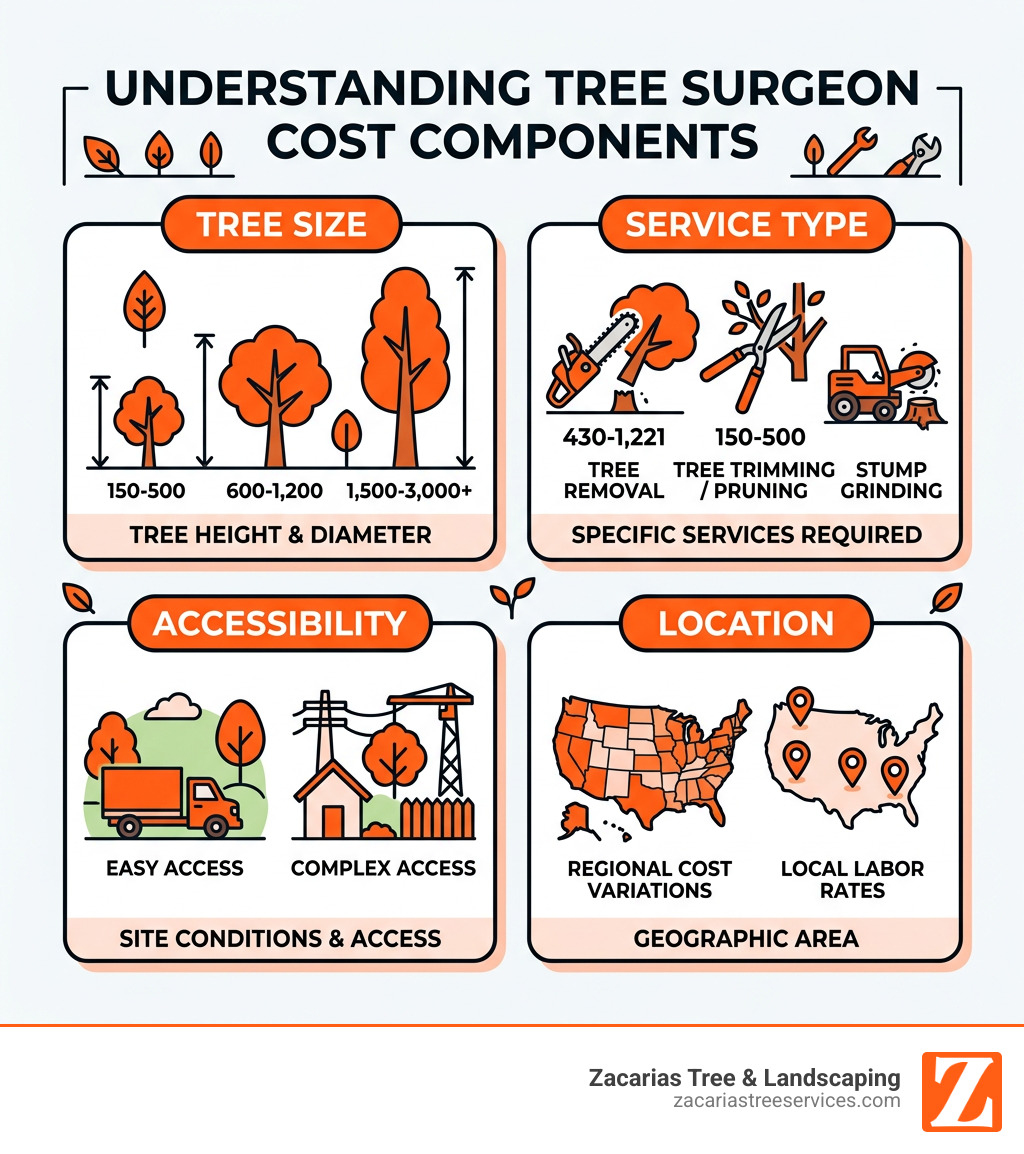
The average price for tree surgeon work isn’t pulled out of thin air. When we walk onto a property in Lexington or Concord, we are looking at several “cost drivers” that determine the final quote.

Size is the single biggest factor in your estimate.
For those interested in the technical side of these big jobs, we have a resource on Branching Out with Professional Crane Tree Removal Techniques.
Can we get our trucks into the backyard? If we have to hand-carry logs through a narrow gate or over a pristine flower bed because a fence blocks our Bobcat, the labor cost will rise. Urban areas like Cambridge or Somerville often present “tight squeeze” scenarios that require more time and specialized equipment compared to a wide-open lot in Ashby or Townsend.
When you receive a quote, make sure you know exactly what is included. Some companies provide a “fell and leave” price, while others provide a full-service experience.
For those dealing with the aftermath of a storm, Getting Your Yard Back with Professional Downed Tree Removal explains the process of cleaning up after the wind settles.
In Massachusetts, you can’t always just start cutting. Many towns have “Heritage Tree” bylaws or Conservation Commission rules, especially if you live near wetlands. Fines for removing a protected tree without a permit can range from $20,000 to $60,000 in extreme cases.
Always ensure your tree surgeon carries high-limit liability insurance and workers’ compensation. If a branch falls on your neighbor’s roof and the company isn’t insured, you could be held liable. For a checklist on what to ask, see our Step-by-Step Guide to Tree Removal Quotes.
We understand the temptation to grab a chainsaw and save a few hundred dollars. However, tree work is consistently ranked as one of the most dangerous jobs in America.
Hiring a professional isn’t just about the work; it’s about the peace of mind that your property—and your shins—will remain intact.
The “dormant season” (late fall through winter) is often the most cost-effective time. Without leaves, we can see the tree’s structure more clearly, making pruning faster. Additionally, the frozen ground can actually protect your lawn from heavy equipment. Many companies offer 10-20% discounts during these slower months to keep their crews busy.
While the terms are used interchangeably, they serve different goals. Trimming is usually for aesthetics—shaping a hedge or clearing a view. Pruning is health-focused. It involves removing diseased, dead, or crossing branches to encourage better growth and prevent future rot. Pruning is generally more technical and may cost slightly more than a simple trim.
Finding the right average price for tree surgeon services involves more than just looking at a single number. It requires an understanding of your specific landscape, the health of your trees, and the expertise required to handle the job safely.
At Zacarias Tree & Landscaping, we pride ourselves on providing the Massachusetts community—from Andover to Weymouth—with rapid response times and efficient, high-quality work. Whether you need a quick estimate for a leaning Pine or a thorough cleanup after a Nor’easter, we are here to help. We combine professional safety standards with a commitment to leaving your yard cleaner than we found it.
Ready to get an accurate price for your property? Contact us today for a free on-site estimate and let us take the guesswork out of your tree care.
Need a pro? Zacarias Tree & Landscaping provides licensed, insured, and expert care across Lynn, Essex, and Middlesex Counties.
We live by a simple promise: Clear scope. Clear plan. Clean finish.
From emergency removals to seasonal landscaping, we’ve been Lynn’s trusted choice since 2002. Safety-first standards. Total site cleanup. Every time.