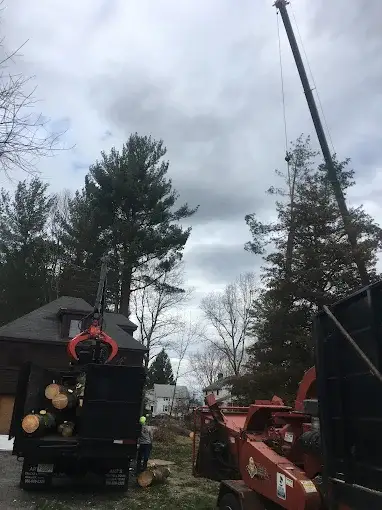
Residential tree removal is the process of safely cutting down and fully clearing a tree from your property — and for many homeowners, it becomes urgent fast, especially after a storm.
Here’s a quick overview of what’s involved:
Trees are genuinely valuable. They provide shade, improve air quality, and add real curb appeal to your property. But when a large tree is damaged, diseased, or dangerously close to your home, it stops being an asset and starts being a liability.
Storm damage is one of the most common reasons Massachusetts homeowners find themselves needing fast action. A split trunk or a leaning tree after a nor’easter isn’t something you can wait on.
The good news? Knowing what to expect makes the whole process a lot less stressful — from spotting the warning signs early to understanding your options for cleanup and what comes next.
This guide walks you through everything, step by step.
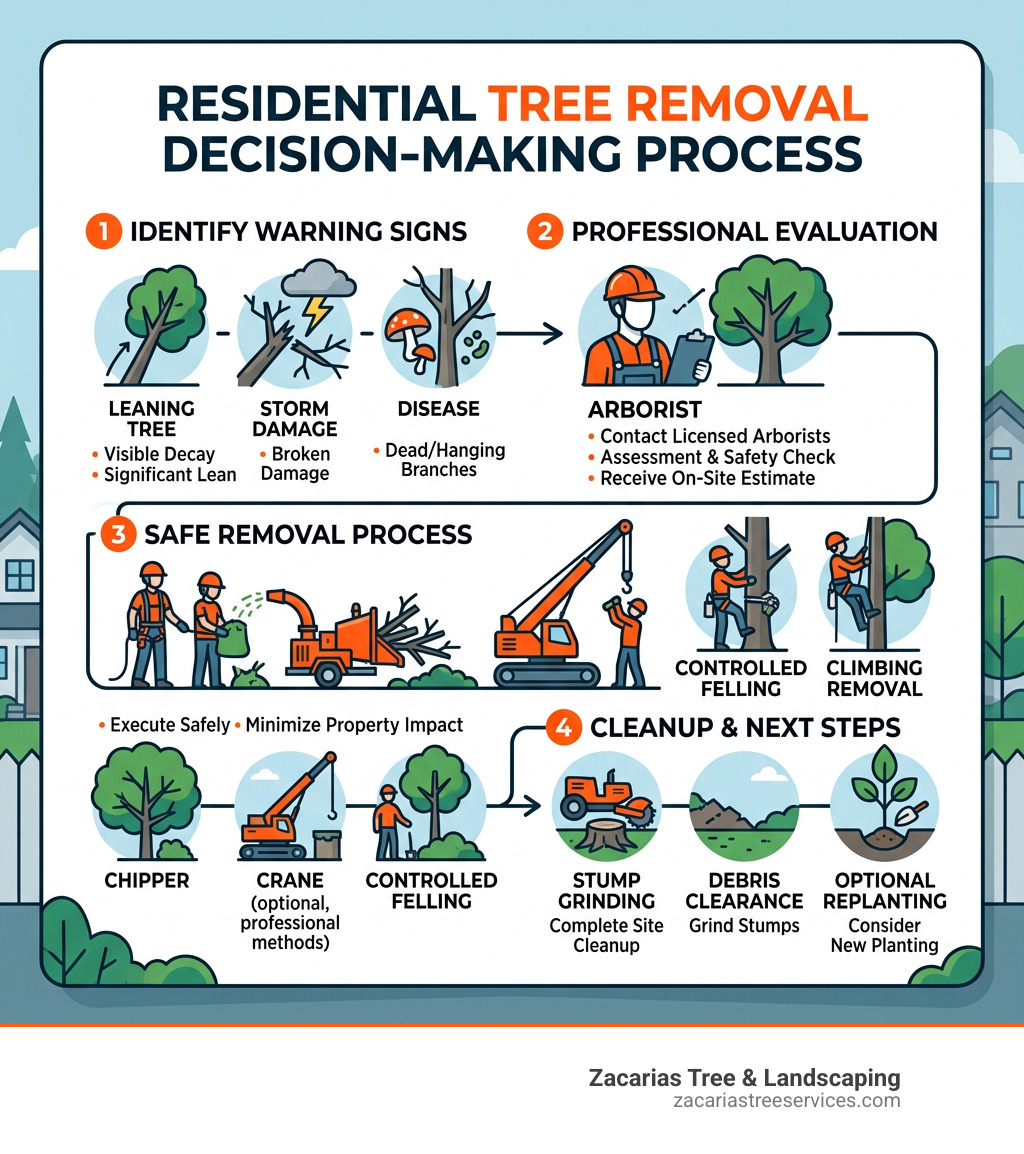
Deciding to part with a tree isn’t always easy. We often grow attached to the oak that’s shaded the backyard for decades or the maple that turns a brilliant red every October in Andover or Lexington. However, sentimentality shouldn’t override safety.
There are several clear Signs a tree needs to be removed that every homeowner should watch for:
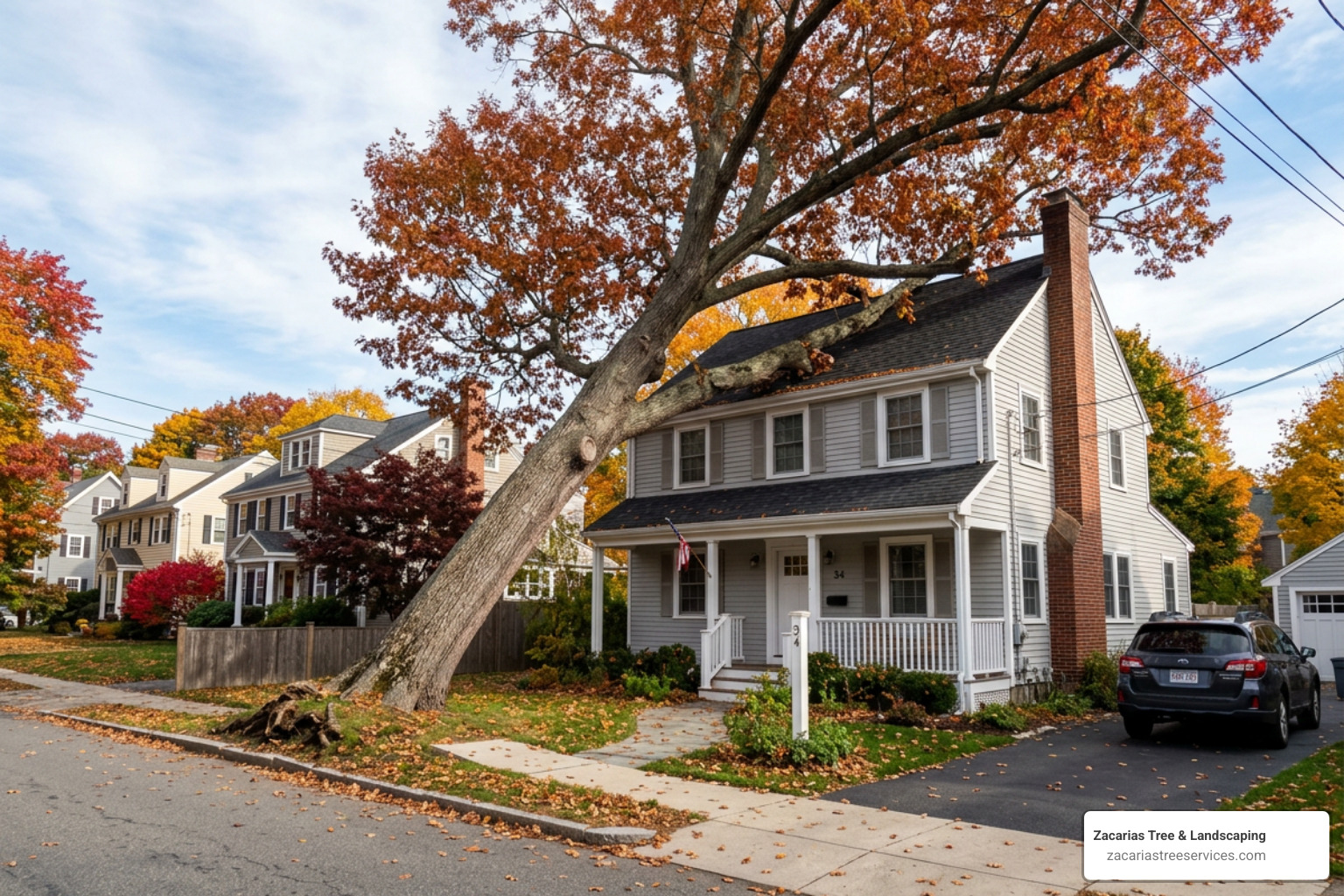
In many cases, nature makes the decision for you. After a heavy ice storm in Ashby or high winds in Billerica, you might find yourself in need of Emergency Tree Service. If a tree has already partially fallen or is resting on another structure, don’t wait. These situations are highly unstable and require immediate professional intervention to prevent further damage.
We get it — the “Do It Yourself” spirit is strong in Massachusetts. But while you might be great at painting the guest room or fixing a leaky faucet, residential tree removal is an entirely different beast. Every year, millions of trees are removed across the country, and unfortunately, many DIY attempts end in property damage or serious injury.
Why is this so dangerous? For starters, trees are incredibly heavy. A single large limb can weigh several hundred pounds. Without the right rigging and physics knowledge, you can’t accurately predict where that limb will land. Then there’s the equipment. Chainsaws are unforgiving, and working at height on a ladder with power tools is a recipe for disaster.
Professional tree services bring three things to the table that a homeowner simply can’t:
For those looking for more information on professional standards, The International Society of Arboriculture is an excellent resource for understanding what makes a qualified tree expert.
When we arrive at a property in Concord or Framingham, we don’t just start swinging saws. We follow a strict set of safety protocols to ensure everyone stays safe. This includes a comprehensive hazard assessment of the site — looking for power lines, underground utilities, and the “drop zone.”
Our crews use advanced rigging techniques, using high-strength ropes and pulleys to lower limbs slowly and under control. We also wear full Personal Protective Equipment (PPE), including helmets, eye protection, and chainsaw chaps. If you want to see what goes into a high-level operation, check out these 5 No-Nonsense Tips for Crane Tree Service.
Before you cut, you need to check the rules. Massachusetts is known for its beautiful greenery, and many towns have strict bylaws to protect it.
Navigating these rules can be a headache, which is why we often help our clients understand the local requirements during the quoting process. For more on how to prepare for this, see our Step-by-Step Guide to Tree Removal Quotes.
One of the most common questions we get is, “How much is this going to cost?” The truth is, every tree is unique. While we can provide general ranges based on national averages and our experience in the Massachusetts market, an on-site estimate is the only way to get a firm price.
Based on general internet research, a small tree removal might start as low as $400, while a massive, complex removal involving cranes and power line clearing can exceed $4,500.
Several factors influence where your project falls on that spectrum:
| Factor | Impact on Cost | Why it Matters |
|---|---|---|
| Tree Height | High | Taller trees require more climbing, more rigging, and more time. |
| Location/Access | High | A tree in an open field is cheap; a tree overhanging a sunroom in Newton is expensive. |
| Tree Health | Moderate | Dead or decaying trees are more dangerous to climb, often requiring a crane. |
| Emergency Status | High | After-hours or storm-response removals carry a premium for rapid mobilization. |
| Stump Grinding | Moderate | Removing the stump is typically an additional service beyond the tree felling. |
Once the tree is down, you’re left with the stump. You generally have two choices: stump grinding or full stump removal.
Leaving a stump behind might seem like a way to save money, but rotting stumps are magnets for pests like termites and carpenter ants. If you want your yard to look its best and stay pest-free, Getting Your Yard Back with Professional Downed Tree Removal is the way to go.
In a word: No. While it’s tempting to try and save a few dollars, the risks of DIY tree removal far outweigh the costs of hiring a professional. Between the danger of falling limbs, the risk of property damage, and the potential for serious personal injury, this is one task that should always be left to licensed and insured experts.
While we perform removals year-round, many arborists prefer winter or early spring. When the ground is frozen, our heavy equipment is less likely to leave ruts in your lawn. Additionally, without leaves on the branches, it’s easier to see the tree’s structure and manage the debris. However, if a tree is hazardous, the “best” time to remove it is right now!
The definition of a “landmark” or “significant” tree varies by town ordinance. Generally, trees with a diameter of 24 inches or more (measured about four feet off the ground) are considered landmark trees. In some Massachusetts towns, these trees have extra protections, and you may need a specific permit or a report from a certified arborist before they can be removed.
At Zacarias Tree & Landscaping, we know that residential tree removal can feel overwhelming. Whether you’re dealing with a hazardous oak in Acton, a storm-damaged maple in Woburn, or just trying to clear space for a new project in Marlborough, we’re here to help.
Our team prides itself on rapid response times, quick and honest estimates, and a level of thorough cleanup that leaves your yard looking better than we found it. We serve dozens of communities across Massachusetts, bringing professional equipment and a “safety-first” mindset to every job.
Don’t let a dangerous tree keep you up at night. If you’re worried about the health or safety of a tree on your property, reach out to us for a professional evaluation. From the first cut to the final stump grinding, we’ll handle the heavy lifting so you can get back to enjoying your landscape.
Ready to clear the way? Learn more about our Tree Removal services and request your estimate today.
Need a pro? Zacarias Tree & Landscaping provides licensed, insured, and expert care across Lynn, Essex, and Middlesex Counties.
We live by a simple promise: Clear scope. Clear plan. Clean finish.
From emergency removals to seasonal landscaping, we’ve been Lynn’s trusted choice since 2002. Safety-first standards. Total site cleanup. Every time.