
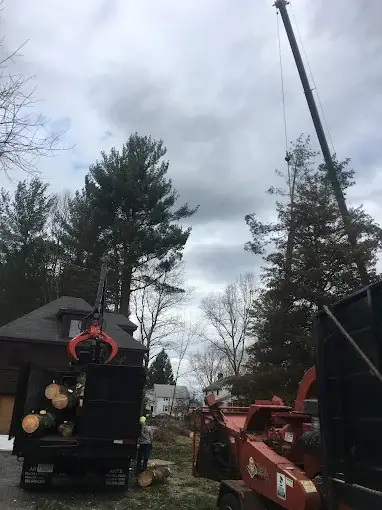
A crane tree service is the right call when a tree is too big, too damaged, or too boxed in to climb and lower piece by piece without risking the house, the crew, or the yard. The crane holds each section before it is cut, then lifts it over roofs and fences to a clear drop zone. Most crane tree work on the North Shore comes down to three things: a safe spot to set up, a clear path for the lifts, and a crew that plans each pick before the saw starts.
Zacarias Tree & Landscaping, a Lynn company since 2002, offers crane-assisted tree removal alongside standard climbing work, so we are not pushed to recommend one method over the other. These five tips explain when a crane earns its cost and how the job runs safely.
Tip 1: Know when a crane is actually needed
Most trees can be removed by a climber who cuts sections and lowers them on ropes. A crane is worth it when that approach becomes slow or dangerous. Common reasons include:
- Nowhere to lower wood. Backyards in Lynn, Swampscott, and Salem are often ringed by houses, garages, and fences, with no open ground to drop or lower sections.
- A tree over the house. A large oak or maple leaning over a roof cannot be lowered safely through the space beneath it.
- Wood that is unsafe to climb. Dead ash killed by emerald ash borer, trunks with decay, and storm-split trees may not hold a climber's weight or rigging loads.
- A tree already resting on a structure. After a storm, lifting the trunk straight up can be the only way to avoid more roof damage.
- Very tall trees. Our guide to removing a 100-foot tree explains why the tallest trees almost always need one.
If none of these apply, a climbing removal is usually the better value. A crane adds a machine and an operator to the day, and the price reflects it.
Tip 2: Plan the setup spot before the crane arrives
The crane has to sit on firm, level ground within reach of the tree. That is often the driveway or the street in front of the house. At the estimate, the crew checks:
- How far the tree is from the nearest spot a crane can park, since reach and lifting capacity drop as the boom extends.
- Overhead wires between the crane and the tree.
- Whether the driveway can carry the weight, and whether there are septic tanks, drain lines, or retaining walls under the setup area.
- Whether the street will be partly blocked. Depending on the town, a street-occupancy permit or police detail may be needed.
Tell your neighbors the date. Cars parked on the street the morning of the job are the most common setup delay.
Tip 3: Protect the lawn, driveway, and hardscape
A crane spreads its weight through outriggers, the legs that extend out and down from the truck. Pads under each outrigger spread the load further. On lawns and soft ground, ground protection mats create a temporary road for the loader or chipper. Ask how the crew protects:
- Pavers, stamped concrete, and asphalt under the outriggers.
- Lawn areas that equipment has to cross, especially after rain.
- Garden beds, irrigation heads, and low walls along the path.
- Roots of trees you are keeping, since heavy equipment compacts soil over them.
Some ruts are possible on very wet ground. A good crew tells you ahead of time what to expect and how the lawn will be left.
Tip 4: Understand how each lift works
Crane removals follow a steady rhythm, and knowing it makes the day less nerve-racking to watch.
- The climber rigs a section. Slings are attached to the piece that will be cut, with the crane hook holding tension.
- The weight is estimated. The crew judges each piece by its size and species. Green oak is far heavier than white pine of the same size, and the pick has to stay inside the crane's load chart.
- The cut is made while the crane holds the load. Nothing free-falls.
- The operator lifts the piece over the house and sets it down in the drop zone, guided by a signal person with a clear view.
- Ground crew processes it. Brush goes into the chipper; trunk wood is cut to length or left as firewood on request.
Everyone not on the crew stays out of the work zone. That includes people inside rooms under the lift path, who may be asked to step elsewhere during picks.
Tip 5: Ask the right questions before you hire
Crane jobs magnify small mistakes, so ask these before you sign:
- Is the crane your own or rented, and who operates it?
- Who plans the lifts, and how are piece weights judged?
- Where will the crane set up, and what protects the driveway and lawn?
- How will you handle overhead wires near the lift path?
- Can I see certificates of liability insurance and workers' compensation?
- Does the quote include stump grinding, cleanup, and hauling?
- What happens if weather cancels the day?
An ISA-Certified Arborist on the job also helps you decide if nearby trees should be pruned while the crane is already on site. Credentials can be checked on the ISA arborist directory.
What crane work costs compared with climbing
A crane day costs more per hour than a climbing crew because of the machine and operator. On the right tree, though, the job finishes much faster, and on a tree over a house the crane can be the only safe method. For how size, species, and access set the overall price, see our tree removal cost guide. The only accurate number is a free on-site estimate.
Frequently asked questions
How long does crane tree work take?
Setup and breakdown add time at each end of the day, but the cutting itself often goes faster than a climbing removal. Most single-tree crane jobs finish in a day, while large or multi-tree jobs can take longer.
Will a crane damage my driveway?
Outrigger pads and mats spread the weight, which protects most driveways. Tell the estimator about pavers, thin asphalt, or anything buried below the setup area.
Can a crane reach a tree in a tight backyard?
Often yes, from the street or driveway, lifting sections over the house. Reach and weight limits decide which pieces can be picked, so the crew plans the job around the crane's position.
Is crane removal safer than climbing?
For trees over structures, dead or decayed wood, or storm-damaged trees, it usually is, because the crane holds each piece before it is cut. For a healthy tree with room to lower wood, climbing is often just as safe and costs less.
Find out if your tree needs a crane
We will look at the tree, the setup area, and the lift path, and tell you honestly whether a crane helps. Learn more about our crane-assisted tree removal, or request a free estimate. Our crews are licensed, bonded, and fully insured, and TCIA-accredited.