Tree pruning is one of the most important things you can do to keep your trees healthy, safe, and looking great. Here’s a quick overview of what you need to know:
Tree Pruning at a Glance:
Trees don’t just grow on their own and stay perfect. Without regular pruning, branches weaken, canopies get overcrowded, and small problems turn into expensive ones — especially after a Massachusetts storm season.
Proper pruning isn’t just about looks. It’s about keeping your trees structurally sound, reducing hazards around your home, and helping your trees live longer.
The good news? For small trees and basic maintenance, pruning is manageable as a homeowner. But for large, storm-damaged, or structurally compromised trees, calling in a professional is almost always the smarter and safer call.
This guide walks you through 5 clear steps — from timing and tools to making the right cuts and knowing when to hand it off to an expert.
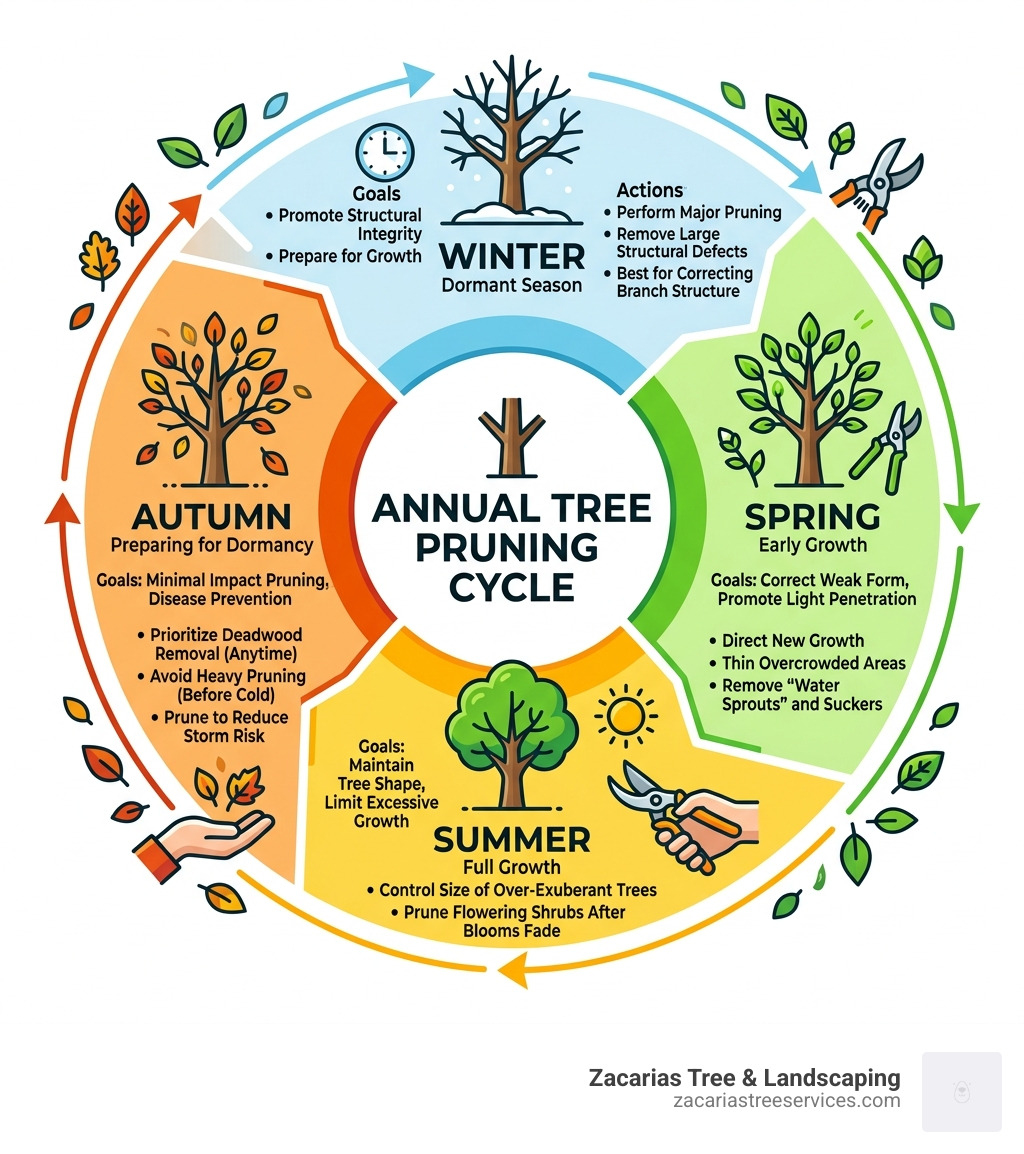
As we move through May 2026, many homeowners in Acton, Concord, and across Massachusetts are looking at their landscapes and wondering if those overhanging branches are a problem. The short answer is: if you haven’t pruned lately, they probably are. At Zacarias Tree & Landscaping, we see how a little bit of “surgical” maintenance can save a tree’s life.
Tree pruning is an ongoing process throughout the life of a tree. It isn’t a one-and-done chore. According to Tree Pruning Techniques | New Mexico State University, proper pruning is both an art and a science, designed to improve plant health, encourage growth, and maintain safety.
When we prune a tree, we aren’t just “cutting hair.” We are helping the tree manage its resources. By removing unnecessary branches, we:
Safety is our top priority. Dead or weak limbs are essentially “widow-makers” waiting for a gust of wind. Pruning helps by:
You wouldn’t use a butter knife to cut a steak, and you shouldn’t use rusty kitchen shears on your Japanese Maple. Having the right tools—and knowing when to use them—is half the battle.
For most residential tree pruning tasks in areas like Andover or Lexington, you’ll need a basic kit. As we’ve noted in our guide on Cutting Back Without Breaking The Bank On Branch Removal, investing in quality tools saves you money in the long run by preventing damage to your plants.
A dull blade crushes the branch instead of cutting it. This creates a jagged wound that is an open invitation for pests. We recommend:
When is the best time? For most trees in our region, the late dormant season (January through early March) is ideal. The tree’s energy is stored in the roots, and without leaves, you can clearly see the “skeleton” of the tree to make better decisions.
Before you make a single cut, you need a plan. We follow the “4 D’s” rule to decide which branches stay and which ones go. This framework ensures you aren’t removing healthy wood unnecessarily.
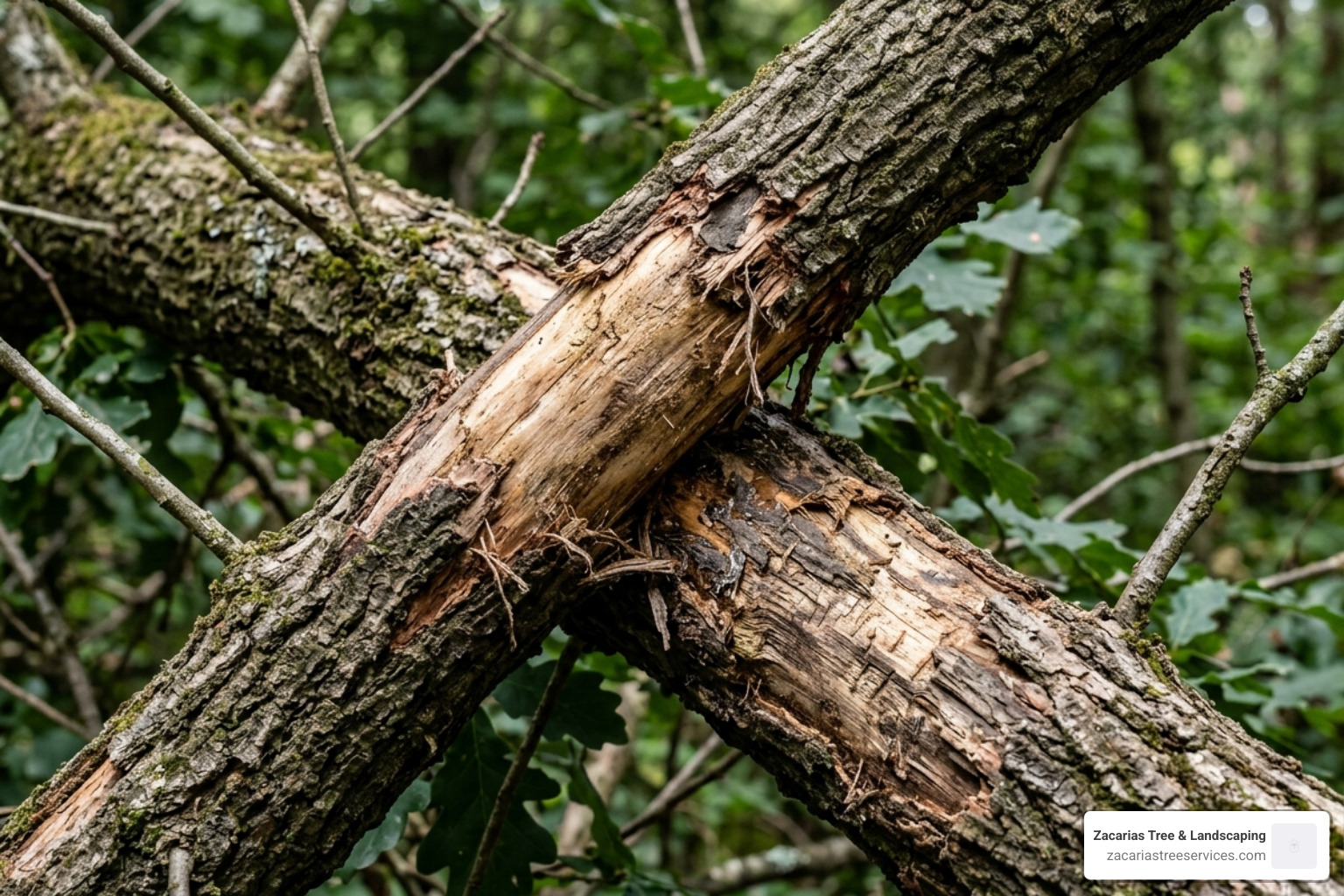
In places like Beverly or Salem, we often see signs of decay that homeowners miss. Look for “conks” (shelf-like mushrooms) growing on the trunk—this usually indicates internal rot. Bark discoloration or “bleeding” can also be a sign of stress. If you see these, it’s time to call us for a professional assessment before the tree becomes a hazard.
If you try to cut a heavy branch with one single downward stroke, the weight of the limb will almost always cause it to snap before you’re finished. When it snaps, it peels a long strip of bark down the side of the trunk. This is called “stripping,” and it can permanently disfigure or kill a tree.
To avoid this, we use the 3-cut method.
The most important part of tree pruning is identifying the branch collar. This is the slightly swollen, wrinkled area where the branch meets the trunk.
Make your final cut just outside that wrinkled collar. This allows the tree to form a perfect “doughnut” of callus tissue that protects the tree for life.
One of the biggest mistakes we see is “over-pruning.” There is a limit to how much a tree can handle. According to Pruning trees and shrubs | UMN Extension, you should generally never remove more than 25% (one-fourth) of a tree’s live foliage in a single season.
Early pruning is the best gift you can give a young tree. It’s much easier to fix a structural issue when the branch is the size of a finger than when it’s the size of a torso.
For older, established trees in our Massachusetts neighborhoods, we have to be more conservative. An old tree has less energy to seal wounds. We often limit removal to 10% of the canopy for senior trees.
While you can certainly handle small ornamental trees and low-hanging branches, some jobs are simply too dangerous for a DIY approach. At Zacarias Tree & Landscaping, we have the specialized equipment—including cranes and bucket trucks—to handle the big stuff safely.
You should put down the saw and call us if:
A “cheap” tree service might offer to “top” your tree to reduce its height. Do not do this. As we explain in The High Price Of Topping Trees And Better Alternatives, topping is perhaps the most harmful thing you can do to a tree.
Topping causes:
Absolutely not. Topping is essentially a slow death sentence for a tree. It destroys the tree’s natural shape and forces it to grow weak, vertical shoots that are prone to breaking. If a tree is too big for its location, the better option is crown reduction or, in some cases, removal and replacement with a more appropriate species for the site.
If you prune maples, birches, or walnuts in the late winter or early spring, you might see sap “bleeding” from the cuts. While it looks alarming, it is generally harmless. The sap flow will stop as soon as the leaves emerge and start using that energy. It’s more of an aesthetic issue than a health one.
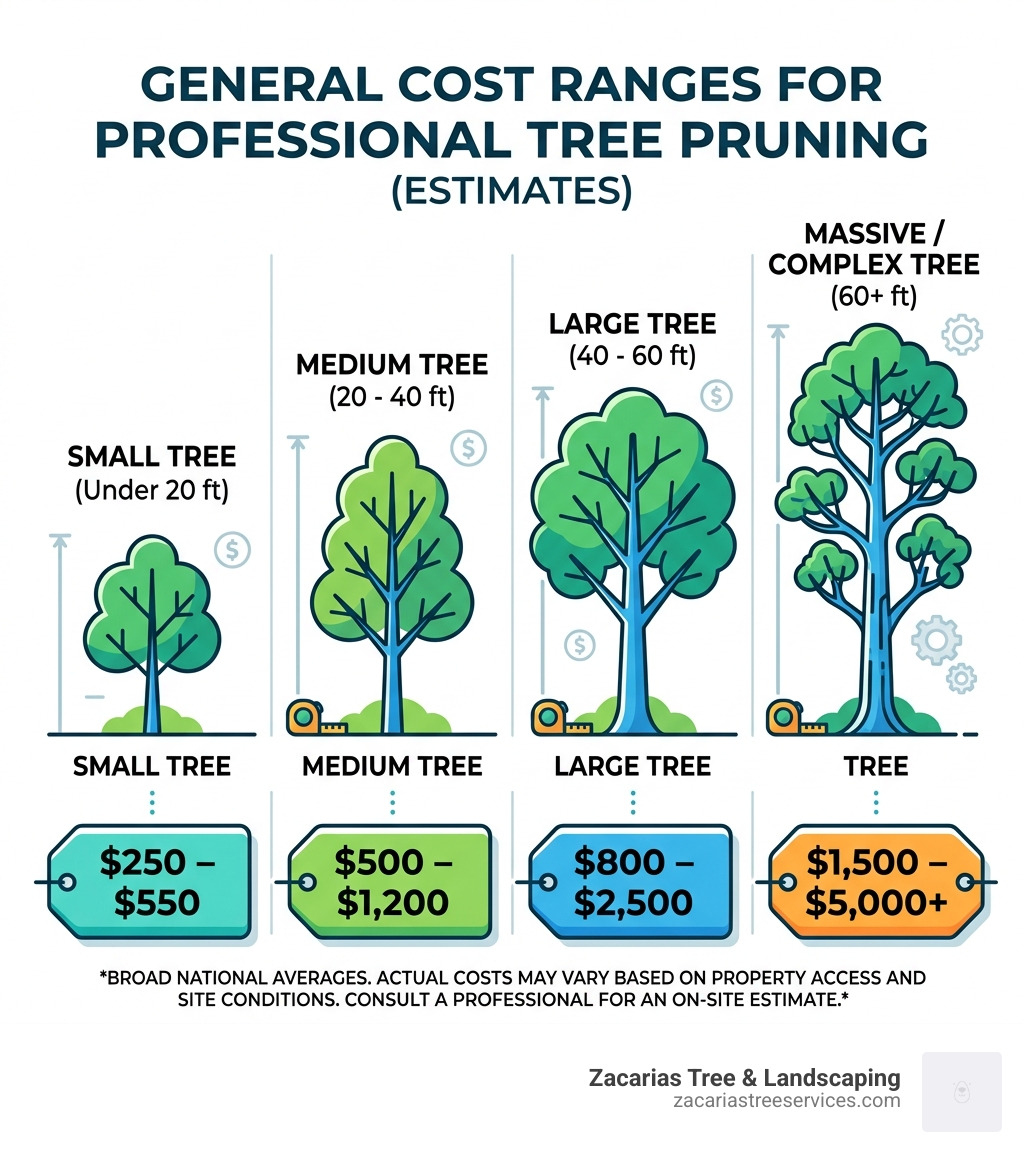
Pricing for tree pruning varies significantly based on the size of the tree, its location (is it over a pool or a shed?), and the complexity of the work. Based on general internet research and national averages, here is what you might expect:
| Service Type | General Cost Range (Estimates) |
|---|---|
| Small Tree Pruning (under 20 ft) | $250 – $550 |
| Medium Tree Pruning (20 – 40 ft) | $500 – $1,200 |
| Large Tree Pruning (40 – 60 ft) | $800 – $2,500 |
| Massive/Complex Trees (60+ ft) | $1,500 – $5,000+ |
Note: These are broad national averages. Actual costs in Massachusetts can vary based on property access and specific site conditions. We always recommend getting a free on-site estimate for accurate pricing.
Tree pruning is one of the best investments you can make in your property’s value and safety. Whether you’re in Braintree, Framingham, or Lowell, keeping your trees in top shape ensures they remain an asset rather than a liability.
By following the 5 steps outlined here—choosing the right time, using sharp tools, following the 4 D’s, mastering the 3-cut method, and knowing when to call the pros—you’re well on your way to a beautiful, healthy landscape.
If you have trees that are looking a bit “deranged” or you’re worried about how they’ll hold up in the next storm, we’re here to help. At Zacarias Tree & Landscaping, we pride ourselves on rapid response, quick estimates, and a thorough cleanup that leaves your yard looking better than we found it.
Ready to give your trees the care they deserve? Check out our guide on How to Have Trees Trimmed Professionally and contact us today for an estimate!
Need a pro? Zacarias Tree & Landscaping provides licensed, insured, and expert care across Lynn, Essex, and Middlesex Counties.
We live by a simple promise: Clear scope. Clear plan. Clean finish.
From emergency removals to seasonal landscaping, we’ve been Lynn’s trusted choice since 2002. Safety-first standards. Total site cleanup. Every time.