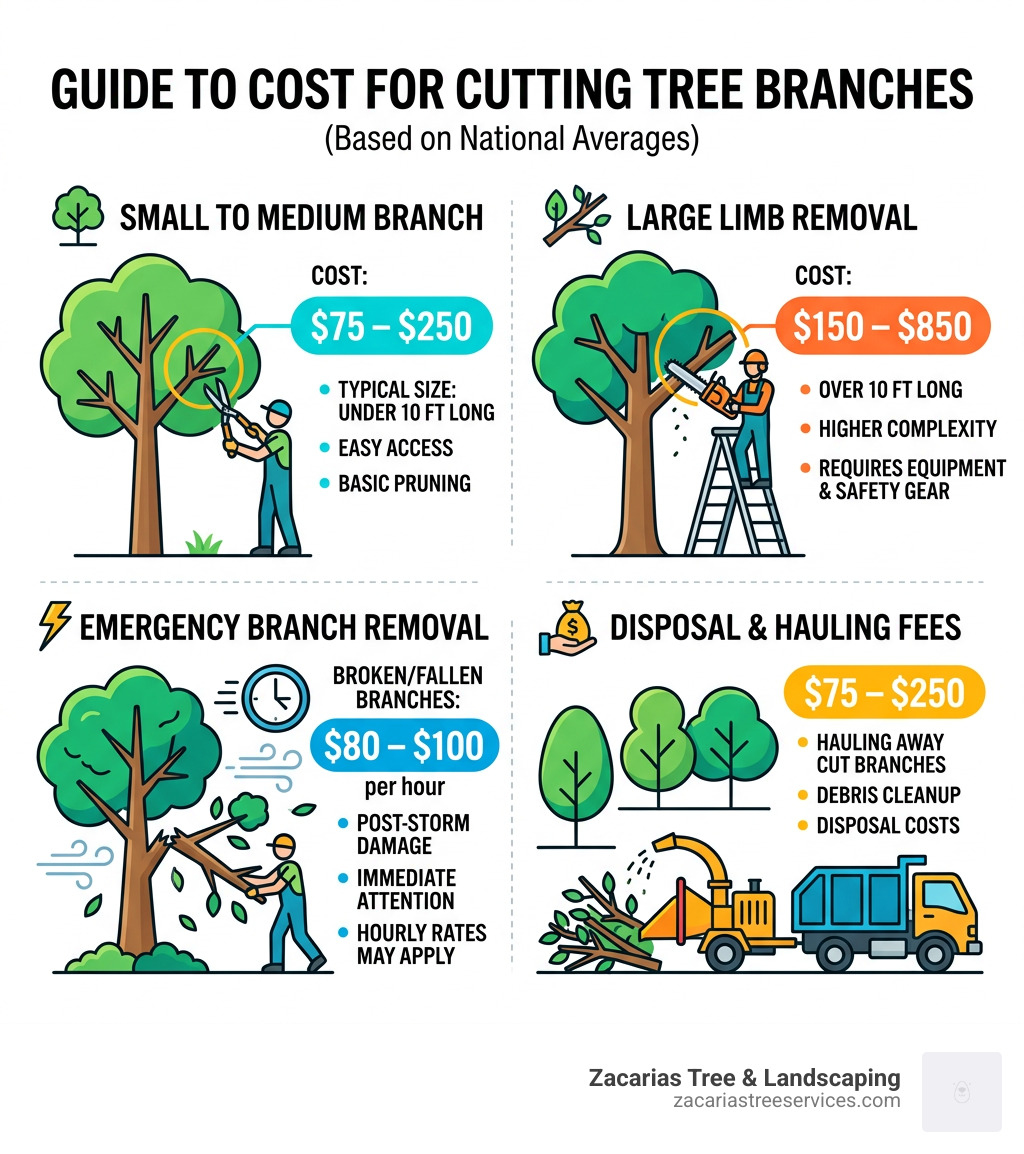
The cost for cutting tree branches typically falls between $75 and $850, depending on branch size, tree height, and how easy it is to access the work area. Here’s a quick breakdown based on national averages:
| Branch Type | Typical Cost Range |
|---|---|
| Small to medium branch | $75 – $250 |
| Large limb (over 10 ft long) | $150 – $850 |
| Broken or fallen branch removal | $80 – $100 per hour |
| Hauling away cut branches | $75 – $250 per job |
Note: These figures reflect general national averages based on industry research. Actual costs vary based on your property’s conditions, tree size, access, and local labor rates. Always get an on-site estimate for accurate pricing.
A storm rolls through. The next morning, you walk into your backyard and a massive limb is hanging at an angle — half-broken, threatening your fence, your roof, or worse. Sound familiar?
For homeowners dealing with storm damage or overgrown trees, branch removal isn’t just about looks. It’s about safety. And when you’re trying to act fast, it helps to know what you’re likely to spend before the crew shows up.
This guide breaks down everything that drives the price of branch cutting — from tree size and species to access challenges and disposal fees — so you can budget with confidence and make a smart decision for your property.
Cost for cutting tree branches basics:
When we talk about the cost for cutting tree branches, it is important to distinguish between a quick “snip” of a low-hanging limb and a complex surgical removal of a massive leader branch. National averages suggest that homeowners spend anywhere from $75 to $850 per project.
For many residents in Massachusetts, from the historic streets of Cambridge to the wooded lots of Concord, the price is often determined by the scale of the job. If you have a single small branch that can be reached from the ground, you might only pay a minimum service fee, which typically ranges from $75 to $250. However, if that branch is 60 feet in the air and weighs several hundred pounds, the complexity—and the price—climbs significantly.
According to the 2025 Tree Branch Removal Cost Guide, the national average for a standard branch removal project sits around $150, but high-end projects involving massive limbs or emergency scenarios can reach $850 or more. At Zacarias Tree & Landscaping, we often see that bundling these tasks into comprehensive Tree Trimming & Pruning Services provides the best value, as the crew is already on-site with the necessary heavy equipment.
| Limb Category | Length/Diameter | Estimated Cost |
|---|---|---|
| Small/Medium | Under 10 feet | $75 – $250 |
| Large Limb | Over 10 feet | $150 – $850 |
| Multi-Branch Thinning | Varies | $200 – $900 |
| Emergency/Hanging | Dangerous position | $150 – $250 per hour |
No two trees are identical, which is why we can’t give a “one-size-fits-all” price over the phone. Several physical and environmental factors play into the final quote.
The higher the branch, the higher the risk. For trees under 25 feet, a simple ladder or pole saw might suffice. Once a tree exceeds 30 to 50 feet, we often need to bring in specialized equipment.

If the branch is located in the “upper third” of a tall tree, it may require a skilled climber using ropes and harnesses or a bucket truck. This specialized labor typically costs more than ground-level work.
Is the branch dead, diseased, or infested with pests? A rotting branch is unpredictable. It may snap unexpectedly during the cutting process, requiring our team to use extra rigging and “speed-lining” techniques to ensure it doesn’t crash into your home. If you suspect your tree is struggling, it is worth asking: Is Your Tree Sick? Here is the Cost for a Professional Inspection. Identifying issues like the Emerald Ash Borer or fungal rot early can actually save you money by preventing a full tree failure later. You can also identify signs of tree disease and decay yourself by looking for discoloration or fungal growth on the bark.
We call this the “tight squeeze” factor. If a tree is in the middle of a wide-open field in Boxborough, the job is straightforward. If that same tree is sandwiched between a house and a power line in a dense neighborhood like Somerville or Medford, the cost for cutting tree branches will increase. We have to take extra time to “piece down” the limb in small sections to avoid damaging your roof, fence, or landscaping.
The type of tree you have in your yard dictates how much muscle—and how much time—is required to get the job done.
We get it—when you see a $500 estimate, it’s tempting to head to the local hardware store in Waltham or Framingham, rent a chainsaw, and “give it a go.” However, branch removal is one of the most dangerous home maintenance tasks you can perform.
While you might save on labor, you’ll still face expenses:
Every year, thousands of homeowners are injured by falling limbs or chainsaw kickback. Professional arborists are trained in “physics-based cutting”—understanding where a limb will swing once the tension is released. If a limb falls the wrong way, you could be looking at thousands of dollars in roof repairs or medical bills. For urgent situations where a branch has already failed, it’s better to consult an Emergency Tree Removal: The Homeowner’s 24-Hour Survival Guide rather than risking your life on a ladder.
The quote for the “cut” isn’t always the total price. To avoid surprises, keep these additional costs in mind:
If a branch is touching or hanging dangerously close to a primary power line, do not touch it. In Massachusetts, utility companies are generally responsible for maintaining clearance around their lines to prevent outages. This service is typically free of charge to the homeowner. Call your local electric provider first. If the line runs from the pole to your house (the service drop), you may be responsible, but you should still hire a professional who is “line-clearance certified.”
For most species, the dormant season (late winter) is ideal. The tree is less likely to “bleed” sap, and the risk of spreading diseases or attracting pests is much lower. However, dead or broken branches should be removed immediately, regardless of the season, to prevent injury.
Most mature trees benefit from a professional pruning every 3 to 5 years. Younger trees may need attention every 2 to 3 years to establish a strong structural shape. Regular maintenance prevents branches from becoming “over-extended,” which reduces the risk of them snapping during a heavy New England snowstorm.
Managing the cost for cutting tree branches doesn’t have to be a headache. By understanding the factors like tree height, limb size, and species, you can better estimate your budget and avoid the “sticker shock” of emergency services. While DIY might seem cheaper on paper, the risks to your safety and your property often outweigh the savings.
At Zacarias Tree & Landscaping, we pride ourselves on providing rapid responses and quick, accurate estimates for homeowners throughout Massachusetts—from Acton and Arlington to Worcester and Winchester. We ensure that every job ends with a thorough cleanup, so your yard looks better than we found it.
Whether you have a hanging limb after a storm or just want to improve your home’s curb appeal, we are here to help. Contact us today for a professional assessment and keep your property safe and beautiful. For more complex needs, explore our options for Professional Tree Removal.
Need a pro? Zacarias Tree & Landscaping provides licensed, insured, and expert care across Lynn, Essex, and Middlesex Counties.
We live by a simple promise: Clear scope. Clear plan. Clean finish.
From emergency removals to seasonal landscaping, we’ve been Lynn’s trusted choice since 2002. Safety-first standards. Total site cleanup. Every time.