Artificial grass costs more than a natural lawn at nearly every stage: more to install, a similar amount of yearly care in a different form, and a removal and replacement bill that a real lawn never sends. For the same area, installed turf asks for far more digging, stone, and material than sod or hydroseed, and a University of Massachusetts Lowell cost review found synthetic fields cost far more than grass over a 16-year life. For most North Shore yards, a well-built natural lawn is the better value; turf earns its place mainly in small, hard-used, or deeply shaded spots where grass has already failed.
Where we stand: Zacarias Tree & Landscaping, a family-run company in Lynn since 2002, installs and renovates natural lawns with sod and hydroseed. We do not sell or install artificial turf. This guide compares the two over the whole life of the lawn so you can decide before spending money on either.
What independent research says, and where it comes from
Good public cost research on backyard turf is scarce, because most of what you read comes from companies selling it. The most useful independent work comes from athletic fields. The Toxics Use Reduction Institute and the Lowell Center for Sustainable Production at UMass Lowell gathered installation, maintenance, and replacement information from industry groups and Massachusetts town grounds managers in their athletic playing fields cost analysis. A few findings translate well to a home lawn:
- Installation: a synthetic field cost far more to build than a natural grass field on native soil, because of the excavation, engineered stone base, drainage layer, carpet, and infill it needs.
- End of life: a worn synthetic surface has to be torn up and disposed of, and the report treats that removal as a real line item, with trucking and landfill charges on top.
- Over 16 years: once installation, upkeep, and replacement were added together, the synthetic field still cost much more in total than the natural one.
A backyard is not a football field, and the gap can look different at home. Small residential jobs carry more fixed cost for each foot of lawn than big fields do, because setup, delivery, and disposal minimums are spread over less ground. The pattern holds, though: turf is the expensive option up front and again at the end. For a single yard, the only accurate number for either option is a free on-site estimate.
The three moments you pay for a lawn
| Stage | Artificial turf | Natural lawn (sod or hydroseed) |
|---|---|---|
| Day one | Highest cost: dig out, stone base, compaction, edging, turf, infill | Lower cost: soil prep, grading, then sod or seed |
| Every year | Rinsing, brushing, debris and leaf removal, infill top-ups, seam repairs | Mowing, feeding, aeration, overseeding, and water in dry spells |
| End of life | Pull up, haul away, dispose of, and replace the whole surface | No end date; worn areas are patched or overseeded |
For how the day-one price breaks down line by line, see our separate guide to artificial lawn cost per square foot. This page stays on the bigger question of which lawn costs less to own.
The yearly costs people forget
Turf is sold as maintenance-free, and it is not. Fibers mat down in traffic lanes and need brushing. Leaves, pine needles, and maple seeds have to be blown or raked off, which matters on the North Shore, where most yards sit under oaks, maples, or white pines. Pet areas need regular rinsing so odor does not build up in the infill. Infill gets kicked out and topped up.
A natural lawn has its own yearly list, and water is the item turf buyers usually want to cut. Watering smarter cuts it too. The EPA's WaterSense watering tips note that most landscapes need about an inch of water a week, rain included, and that midday watering loses much of it to evaporation. A lawn watered early in the morning, on a timer that skips rainy days, uses far less than one watered by guesswork.
Heat, drainage, and winter in New England
On a sunny July afternoon, synthetic fibers get much hotter than living grass, hot enough to be uncomfortable for bare feet and paws. North Shore summers are milder than in the South, but a south-facing yard with no shade still bakes, and rinsing only cools the surface for a short while.
Turf drains down through its backing into the stone below. When the soil underneath is heavy or the base is thin, water sits there and freezes and thaws all winter, which can leave ripples and soft spots by spring. On a natural lawn, drainage trouble shows up as soggy patches that grading and drainage work can fix without tearing up the whole surface.
Snow is its own issue. Plow blades, metal shovels, and rock salt can damage turf fibers, so snow on synthetic grass is usually left to melt or cleared gently with plastic tools.
Where turf can make financial sense
- A small courtyard or narrow city yard where a mower will not fit
- Deep shade next to a building where grass has failed for years (shade-tolerant seed, groundcover, or a patio are worth pricing first)
- A small dog run with constant wear
- A roof deck or balcony with no soil at all
For an ordinary front or back yard with a few hours of sun, renovation usually wins on cost. A thin, weedy lawn can often be brought back with soil work and overseeding, or replaced with sod or hydroseed. The UMass Extension turf program publishes Massachusetts lawn guidance that is worth reading before deciding a lawn is beyond saving. If less mowing is the real goal, a design with more planted beds and less lawn is another route; see our ideas on low-maintenance landscape design.
A quick way to compare the two for your yard
- Get a turf quote and a natural lawn quote for the same area.
- Ask the turf installer how long the product is expected to last in full sun, and what removal and replacement would cost at that point.
- Estimate your yearly lawn care and water for a natural lawn, then the brushing, rinsing, and infill for turf.
- Add each option's install, yearly costs over that lifespan, and end-of-life cost. Compare totals, not day-one prices.
For the comparison to be fair, both written quotes should cover the same square footage and spell out the prep: how much soil comes out, how the area is graded, how drainage is handled, and whether removal and haul-away of the old lawn is included. A quote that skips the prep is not really cheaper; it just leaves that work unpriced.
Frequently Asked Questions
How much does artificial grass cost compared with sod?
Turf costs far more to install than sod for the same area, and hydroseed usually costs less than sod. The gap comes from the work under the surface: turf needs the old soil dug out, a compacted stone base, edging, the turf itself, and infill, while sod or seed goes onto improved native soil. Independent field research from UMass Lowell shows the same pattern. For a real number on your yard, get a free on-site estimate that prices both options for the same area.
Is artificial grass cheaper than a real lawn in the long run?
Rarely, for a normal-sized yard. It saves on mowing and water, but the high install cost and the eventual removal and replacement usually outweigh those savings.
Does artificial grass hold up in Massachusetts winters?
It can when the base drains well. Snow removal has to be gentle, and a poorly built base can shift with repeated freezing and thawing.
Does Zacarias install artificial turf?
No. We install and renovate natural lawns with sod and hydroseed, and handle the grading, drainage, and irrigation that keep them healthy.
What is the least expensive way to get a good-looking lawn?
Usually renovating the lawn you already have: fixing the soil, overseeding, and correcting drainage. When full replacement is needed, hydroseed generally costs less than sod.
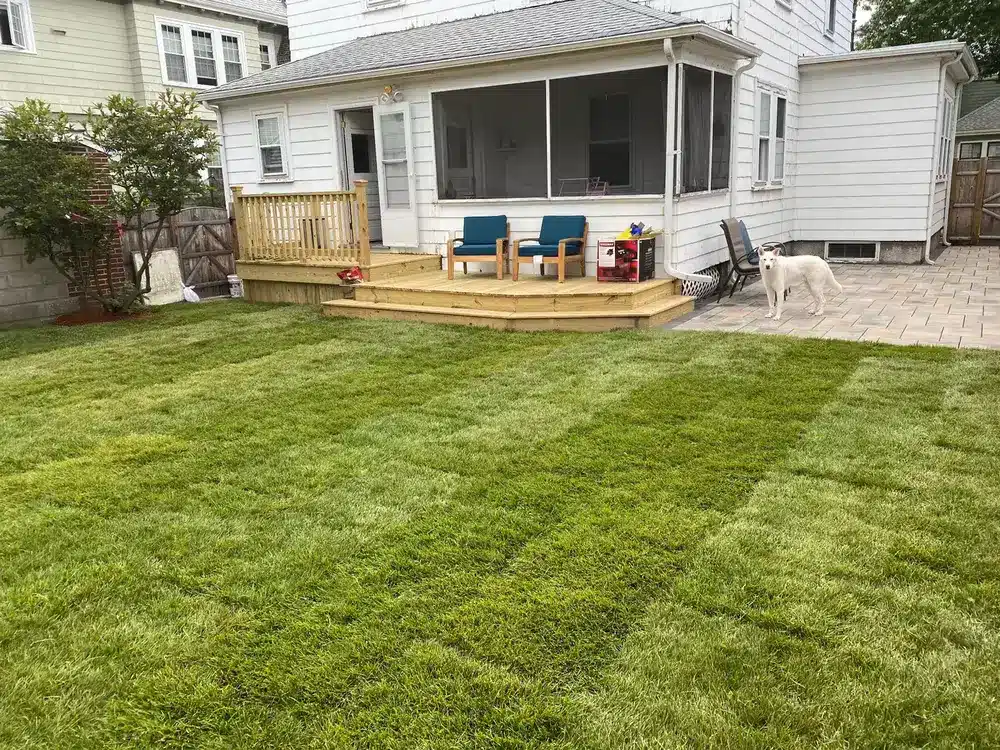
If a real lawn is where you are leaning, see our lawn installation and renovation service and our guide to laying sod in New England. Lawn pricing depends on size, soil, grading, and access, so the only accurate number is a free on-site estimate, and our work comes with the No-Surprise Pricing Guarantee.