
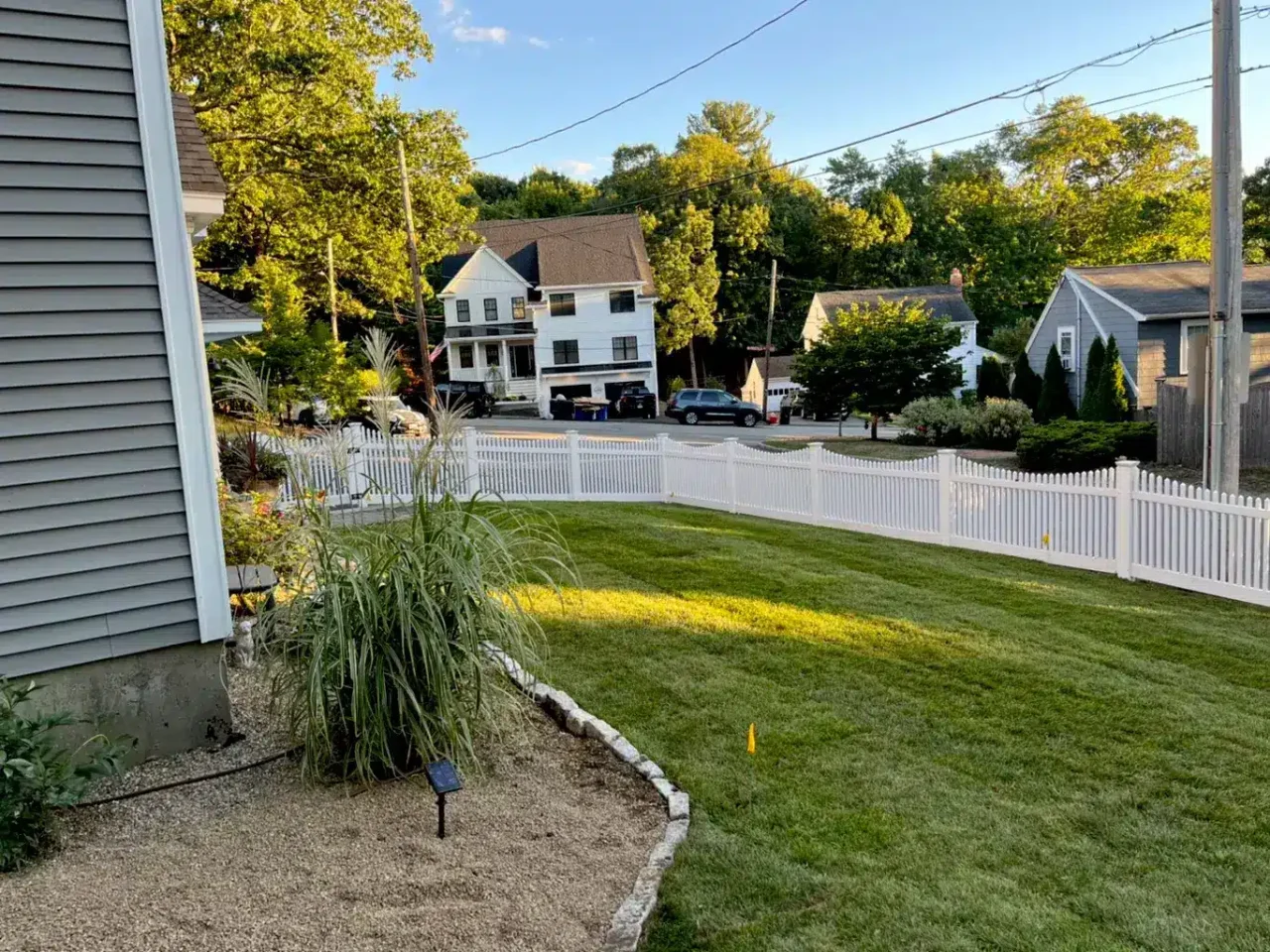
Low maintenance landscape design is about removing the chores a yard creates, not about planting something that never needs care. In New England that comes down to a few choices: less lawn and fewer edges to trim, plants that fit their space at full size, native and hardy species that handle our winters, dense mulched beds that shade out weeds, and watering on a timer. A yard built that way still needs a spring and fall visit, but not every free Saturday.
Zacarias Tree & Landscaping has designed, planted, and maintained yards around Lynn and the North Shore since 2002, so we see which features keep asking for attention years after installation. This guide focuses on those.
Figure out where your time goes now
Before changing anything, list the jobs you do in a typical season and roughly how long each takes. For most homeowners the top of the list is the same: mowing and trimming, weeding beds, shearing overgrown shrubs, hauling a hose around, and raking. Each of those points to a design fix. Mowing time drops when there is less lawn. Weeding drops when beds are fully planted and mulched. Shearing disappears when shrubs are the right size to begin with.
Swap high-effort features for easier ones
| High-effort feature | Why it eats time | Lower-effort swap |
|---|---|---|
| Lawn in deep shade or on a steep slope | Thin grass, constant reseeding, hard mowing | Shade groundcover, mulched bed, or a planted slope |
| Wavy bed edges and islands | Extra string trimming and edging every week | Fewer, smoother curves with a metal or stone edge |
| Fast-growing hedge under a window | Shearing two or three times a year | Dwarf shrubs that top out below the sill |
| Scattered single plants in open mulch | Bare soil between plants fills with weeds | Plants massed in groups that knit together |
| Hand watering with a hose | Daily chore in July, missed days stress plants | Drip lines or zoned irrigation on a controller |
Keep only the lawn you use
Grass is the highest-maintenance surface in most yards. That does not mean ripping it all out. Keep the open area where kids play or the dog runs, and convert the strips nobody walks on: the narrow side yard, the slope by the street, the patch under the maple. Where you keep lawn, simple shapes and a hard edge mean the mower does most of the trimming. If the remaining lawn is tired, our lawn installation and renovation service can reset it once rather than patching it every year.
Plant for the mature size
The most common reason a yard becomes work is a plant chosen for how it looked at the nursery. A standard arborvitae or a burning bush beside a walk will need cutting back for the rest of its life. Read the tag for height and spread at maturity and space for that number. It looks sparse for the first two seasons, and then it looks right for the next twenty.
Native and hardy plants that earn their spot
Plants adapted to Massachusetts soils and winters need less water, less feeding, and less fussing. Check your zone on the USDA Plant Hardiness Zone Map, then look for species that handle the conditions in each part of your yard.
- Sunny, dry spots: little bluestem, switchgrass, coneflower, black-eyed Susan, and catmint.
- Coastal or salty areas: bayberry, rugosa rose, and beach plum tolerate wind and salt spray.
- Wet or low areas: winterberry holly, summersweet, and red twig dogwood.
- Part shade: inkberry, ferns, and native sedges.
- Small trees: serviceberry and eastern redbud stay modest in size and need little pruning.
Let mulch and density do the weeding
Weeds need light and bare soil. Take both away. Plant beds densely enough that plants touch within a few seasons, and keep two to three inches of shredded bark mulch between them until they do. Refresh the mulch once a year in spring rather than piling it deeper. Landscape fabric under mulch tends to trap weed seed on top and becomes a tangled mess later, so most beds do better with good mulch and dense planting instead. Our planting and mulch installation crews can set up beds this way from the start.
Water on a schedule, not by memory
Massachusetts summers often bring dry stretches, and hand watering is the chore that slips first. Drip lines in beds deliver water at the roots with little waste, and a zoned system with a weather-aware controller skips runs after rain. The EPA WaterSense program lists controllers that adjust to local conditions. Our irrigation systems page explains how we lay out zones, and any system here needs to be winterized before hard freezes.
The upkeep that does not go away
Even the easiest yard needs a few visits a year. Plan on a spring cleanup to cut back perennials and refresh mulch, one light pruning pass on shrubs, fall leaf removal, and irrigation shutdown before winter. If you would rather hand those off, our seasonal cleanups and property maintenance services cover them. If mature trees shape your yard, our guide to landscape design around trees explains how to plant under them without harming roots.
Frequently asked questions
What is the lowest maintenance ground cover for Massachusetts?
It depends on light. In shade, native sedges, epimedium, and ferns fill in and need little care. In sun, low junipers, bearberry, and creeping thyme handle dry soil well once established.
Is a yard with no lawn lower maintenance?
Not always. A large bed that is poorly planted can take more weeding than grass. Converting the hardest-to-mow areas and keeping a simple, usable lawn is usually the best balance.
Are native plants really easier to care for?
Once established in the right spot, most need less water and fertilizer than exotic ornamentals. They still need watering the first season and a place that matches their preference for sun or shade and wet or dry soil.
Should I use stone instead of mulch?
Stone does not break down, but weeds root in the dust that settles between stones, and it holds heat against plants. Mulch feeds the soil as it breaks down, and a yearly refresh is usually less work than keeping stone clean.
Design it once
A lower-effort yard comes from decisions made at the design stage, not from working harder later. Our landscape design and construction team plans and builds these yards across the North Shore and Essex and Middlesex Counties. Request a free estimate to talk through what you want to stop doing.