
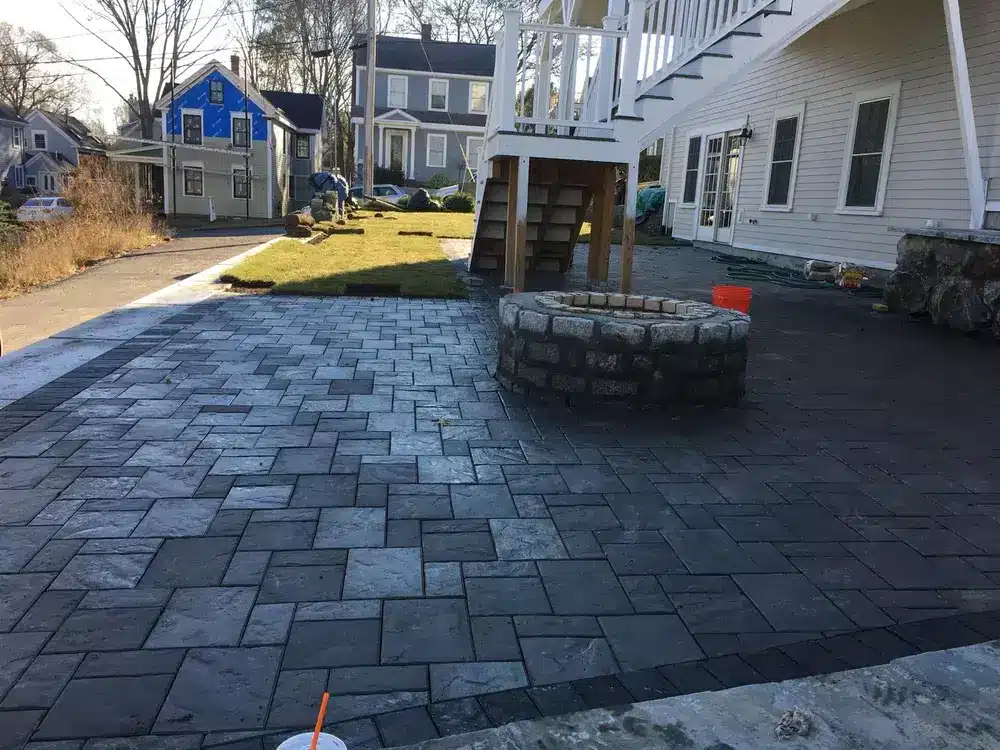
A first landscaping project with Zacarias Tree and Landscaping follows four stages: a free, no-obligation on-site estimate, usually scheduled the same day you reach out; a design and written scope; installation; and maintenance if you want it. Along the way you make a handful of decisions, and knowing them ahead of time is what keeps a first project from stalling. This guide walks through what gets looked at, what a scope should spell out, and what is yours to decide at each stage.
For the company background (family-run in Lynn since 2002, ISA-Certified Arborists on staff, TCIA-accredited, licensed, bonded, and fully insured), see our about us page. This page is about the project itself.
Stage 1: the estimate visit
The estimate happens on your property, not over photos, because most of what sets the price and the plan is only visible on site. On a first landscaping visit, these are the things worth making sure get looked at:
| On site | Why it matters |
|---|---|
| Slope and where water goes | Decides whether grading or drainage has to come before anything else |
| Existing trees | Roots, shade, and hazard limbs affect where a patio or bed can go |
| Soil and ledge | Shallow rock and heavy clay change excavation and planting plans |
| Access for equipment | Gate widths and side yards decide what machines fit and what gets protected |
| Buried and overhead lines | Utilities, irrigation, and lighting wire shape where digging can happen |
| Sun and wind exposure | Sets which plants and lawn types will actually thrive |
Your decisions at this stage: what you want the yard to do (more usable space, less upkeep, privacy, fixing a wet spot, dealing with a problem tree), what bothers you most right now, and a rough budget range. A range is not a commitment; it helps separate what fits now from what can wait. Photos of standing water after a heavy rain or of past storm damage are useful because a dry day hides them. If your lot is near wetlands or you have HOA rules, mention it, since some work needs your town's conservation commission or building department.
Stage 2: the design and written scope
For a small job, the design may be a simple sketch. For a full yard it lays out hardscape, beds, lawn, drainage, lighting, and irrigation together. We have ISA-Certified Arborists on staff, so ask about keeping, pruning, or removing existing trees while the plan is drawn. Our landscape design and construction page covers this side of the work.
Whoever you hire, a written scope should make these clear before anything is signed:
- What is included: each area of work, with materials named (paver type, stone, plant list, sod or hydroseed).
- What is excluded: anything you might assume is part of the job but is not, such as hauling old material or repairing a lawn outside the work area.
- Site protection: how the driveway, lawn, and trees near the work will be protected.
- Order of work: which part happens first and why.
- Aftercare: watering and care the new plants, lawn, or hardscape will need from you.
Your decisions at this stage: materials and plant choices, whether to build everything at once or in phases, and which phase comes first if you split it.
Building in phases
A big yard does not have to be built in one season, but it should be designed as one plan so later phases do not undo earlier ones. The logic is simple: work that brings heavy equipment or sets grades goes early, and finishes that are easy to add later go last. Our guide to planning landscaping services in the right order covers the full sequence and how New England seasons fit around it, so we will not repeat it here. For a first project, the practical takeaway is:
- Phase one usually handles safety and structure: a hazard tree, drainage, a retaining wall, or the main patio, plus any pipe sleeves or wire that later phases will need.
- Later phases add walkways, lighting fixtures, extra beds, and a fire pit, which slot in cleanly when the groundwork was planned for them.
Stage 3: installation
Because tree services, landscaping, and hardscaping are services of one company, a job that needs a tree removed, a patio built, and new plantings can be planned together. Depending on the plan, installation can include tree removal with stump grinding, pruning, crane-assisted removal for large or confined trees, lawn installation with sod or hydroseed, planting and mulch, irrigation systems, outdoor lighting, grading and drainage, and hardscape such as patios, walkways, walls, driveways, and fire pits.
Your decisions at this stage: fewer than you might think. Keep access clear on work days, plan where cars and pets will be, and raise questions as they come up rather than at the end. Before the crew leaves, walk the finished work and go over the aftercare list.
Stage 4: aftercare and maintenance
New sod and plantings are most at risk in their first season, mostly from too little or badly timed water. After that, a yard needs seasonal care to stay the way it looked on day one. We offer seasonal cleanups, property maintenance, irrigation service, and ongoing tree care. Some homeowners hand over the whole yard; others handle routine care and call for spring and fall work.
Your decision at this stage: how much of the care you want to do yourself.
When to start a first project on the North Shore
Timing decides how fast a first project moves from the first call to a finished yard, and a few New England realities are worth planning around.
- Spring books up first. The weeks right after the ground thaws are the busiest of the year for estimates and installs, so reaching out in late winter often earns an earlier start date than waiting for the first warm weekend.
- Planting has two good windows. Spring and early fall are the kindest times to put in trees, shrubs, and lawn, because roots settle before summer heat or winter cold arrives. Sod or seed started in a July heat wave needs far more water just to survive.
- Hardscape runs later into the year. Patios, walls, and walkways do not depend on a growing season, so they can be built well into the fall until a hard freeze finally stops excavation and concrete work.
- Winter is for planning. Design, quotes, and much tree work carry on through the cold months, so a project designed over the winter can be ready to install the moment spring opens up.
If your first call is an emergency
Not every first project is planned. When a nor'easter or ice storm brings a tree down, we provide 24/7 emergency and storm response; our emergency tree service page explains what to do while you wait.
Frequently Asked Questions
Is the estimate really free?
Yes. On-site estimates are free and no-obligation, and they are usually scheduled the same day you reach out.
What should I have ready before the first visit?
Your goals for the yard, the problems that bother you most, a rough budget range, photos of wet spots or storm damage, and anything you know about property lines, HOA rules, or buried lines.
Can I do my first landscaping project in stages?
Yes. Design the whole yard once, then build the parts that set grades and drainage first and add finishes in later phases.
Do you handle both tree work and landscaping?
Yes. Tree removal, pruning, planting, and arborist assessments are done alongside landscaping and hardscaping, so one company can plan and complete the whole project.
What areas do you serve?
Lynn, the North Shore, and Essex and Middlesex Counties. See our service area page for the towns we cover regularly.
Whether it is one tree or a whole yard, the first step is the same. Explore our landscaping services, then request a free estimate and we will come out to see the property.