
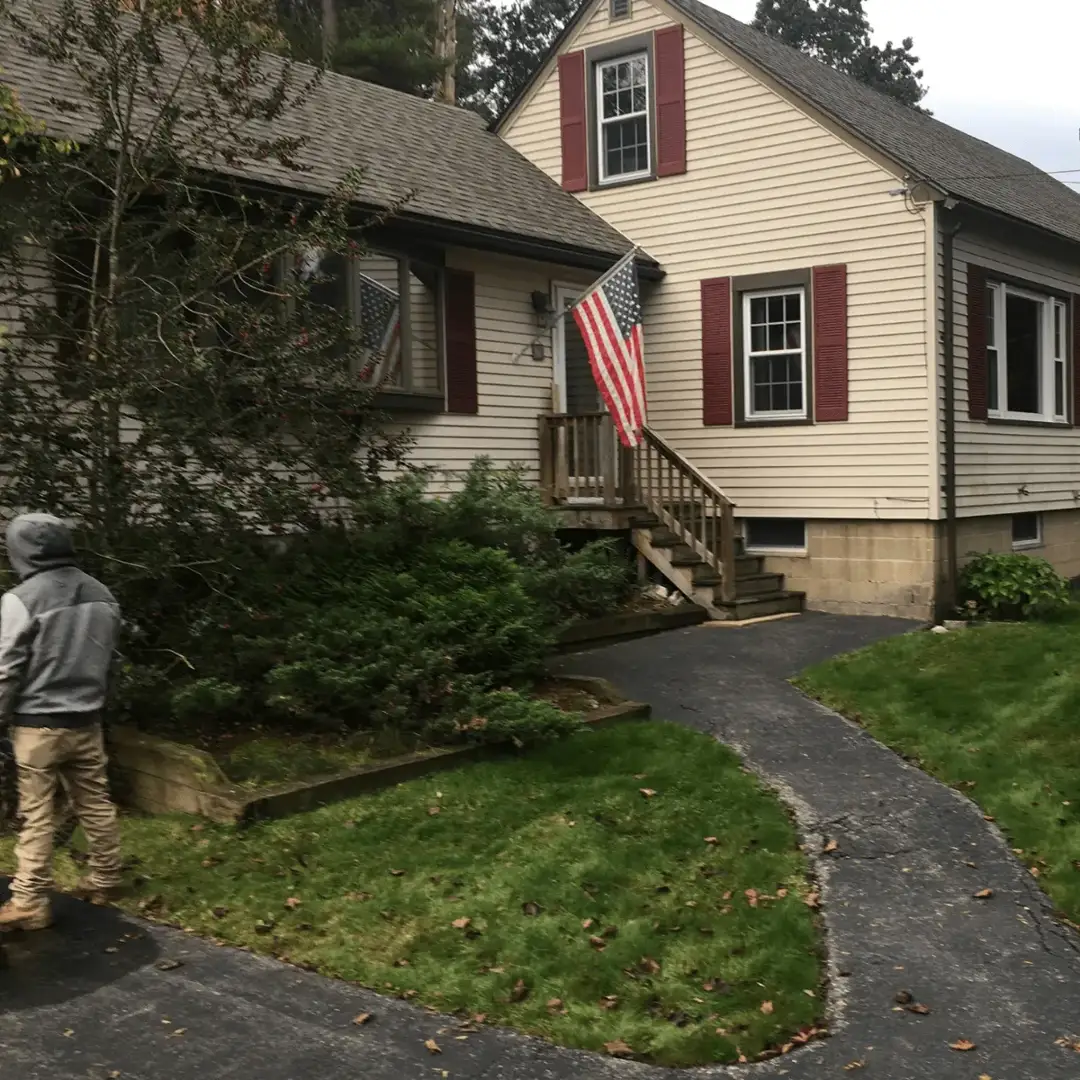
The simplest way to keep a landscaping project on budget is to book landscaping services in the order the ground demands: tree work first, then grading and drainage, then anything buried (irrigation, lighting wire), then hardscape, and planting, lawn, and mulch last. Doing it out of order is how homeowners end up paying twice, because a new lawn gets torn up for a patio or a fresh bed gets crushed by a stump grinder.
We are Zacarias Tree & Landscaping, a family-run tree and landscape company based in Lynn. Because we do tree removal, grading, hardscape, irrigation, and planting ourselves, we plan the whole sequence for North Shore homeowners and see where projects tend to go over budget. This is the order we recommend and why.
The build order, step by step
- Tree removal, pruning, and stumps. Heavy equipment and falling wood damage everything around them. Take down hazard trees, prune what stays, and grind stumps before anything new goes in. Our tree services cover this stage.
- Grading and drainage. Shape the ground so water moves away from the house and off the areas you plan to use. A patio or lawn built on a low spot will fail no matter how well it is finished. See our grading and drainage work.
- Buried lines. Irrigation pipe, sleeves under future walkways, and low-voltage lighting wire all go in while the soil is open. Adding them after a patio is set means cutting or boring under finished work.
- Hardscape. Patios, walkways, walls, driveways, and fire pits come next, since building them involves excavators, compactors, and stone deliveries. Our explainer on what hardscaping includes walks through each type.
- Planting. Trees first, then shrubs, then perennials, so larger root balls are placed before smaller plants fill around them.
- Lawn. Sod or hydroseed goes down once the heavy traffic is over.
- Mulch and finishing. The last layer, spread once all digging is done.
Match the work to the season
New England seasons open and close windows for different kinds of work, and scheduling with them saves money and replanting.
- Late fall and winter: a good time for many tree removals, since frozen ground carries equipment with less lawn damage and deciduous trees are easier to read without leaves. It is also the time to settle on a design and get estimates, before spring schedules fill.
- Spring: once the ground dries out, grading, hardscape, and planting can start. Soil that is still saturated from snowmelt compacts badly under machines.
- Summer: fine for hardscape and irrigation. Planting and seeding are possible but need more water.
- Late summer into early fall: often the best window for new lawns and a strong second window for trees and shrubs.
Irrigation also has to be shut down and blown out before hard freezes, so install it early enough in the year to use it.
Plan the whole yard, build in phases
You do not have to build everything at once, but you should design everything at once. A single plan shows where the patio, the lighting, the beds, and the drainage will eventually go. Then phase one can include the sleeves, wire, and grading that phase two will need. Without that plan, each phase is designed in isolation, and later work undoes earlier work.
Deciding what goes in phase one
- Safety and damage first: a dead tree over the house or water running into the basement comes before anything cosmetic.
- Structure next: grading, walls, and hardscape are the expensive, disruptive parts, so do them before the soft finishes.
- Finishes can wait: plantings, lighting fixtures, and extra beds are easy to add later if the groundwork is done.
Where landscaping budgets usually leak
- Skipping drainage: a patio or lawn over a wet spot heaves, puddles, or dies, and fixing it means removing it. Our post on solving drainage before a patio explains why.
- Thin bases under hardscape: freeze-thaw punishes shallow gravel bases, and settled pavers cost more to fix than to build right.
- Planting before the lines go in: trenching irrigation through an established bed destroys roots and the plants above them.
- Lawn where lawn cannot grow: seeding deep shade under maples every spring is money spent on a result that will not last.
- Forgetting access: if the only way into the back yard is through the side lawn, that lawn should be finished last.
Before you call for estimates
Write down what you want to use the yard for, what bothers you about it now, and a rough budget range. Photos of wet spots after heavy rain are useful. Know where your property lines are, and check whether your town or HOA has rules about walls, grading, or trees; your building department or conservation commission is the place to ask, especially near wetlands. And call Dig Safe before any digging so utilities get marked. If this is your first project with us, our guide to working with Zacarias explains how the estimate, design, installation, and maintenance stages fit together.
Frequently asked questions
Should hardscaping or landscaping come first?
Hardscape first. Patios, walls, and walkways need excavation and heavy equipment, which would damage new plantings and lawn. Plant and seed after the stone work is done.
What is the best time of year to start a landscaping project?
Plan and get estimates in winter, then start construction in spring once the ground dries. Late summer and early fall are strong for lawns and planting, so a spring build often finishes with fall planting.
Can I do a landscaping project in stages?
Yes, and many homeowners do. The key is one overall design, so the first stage includes the grading, drainage, and buried lines that later stages rely on.
Should tree removal happen before landscaping?
Almost always. Removal and stump grinding bring heavy equipment and debris, so finish that work before new beds, lawn, or hardscape go in.
Start with one plan
Our landscaping services team plans the sequence and builds it across Lynn, the North Shore, and Essex and Middlesex Counties. Request a free estimate to lay out the order for your yard.