
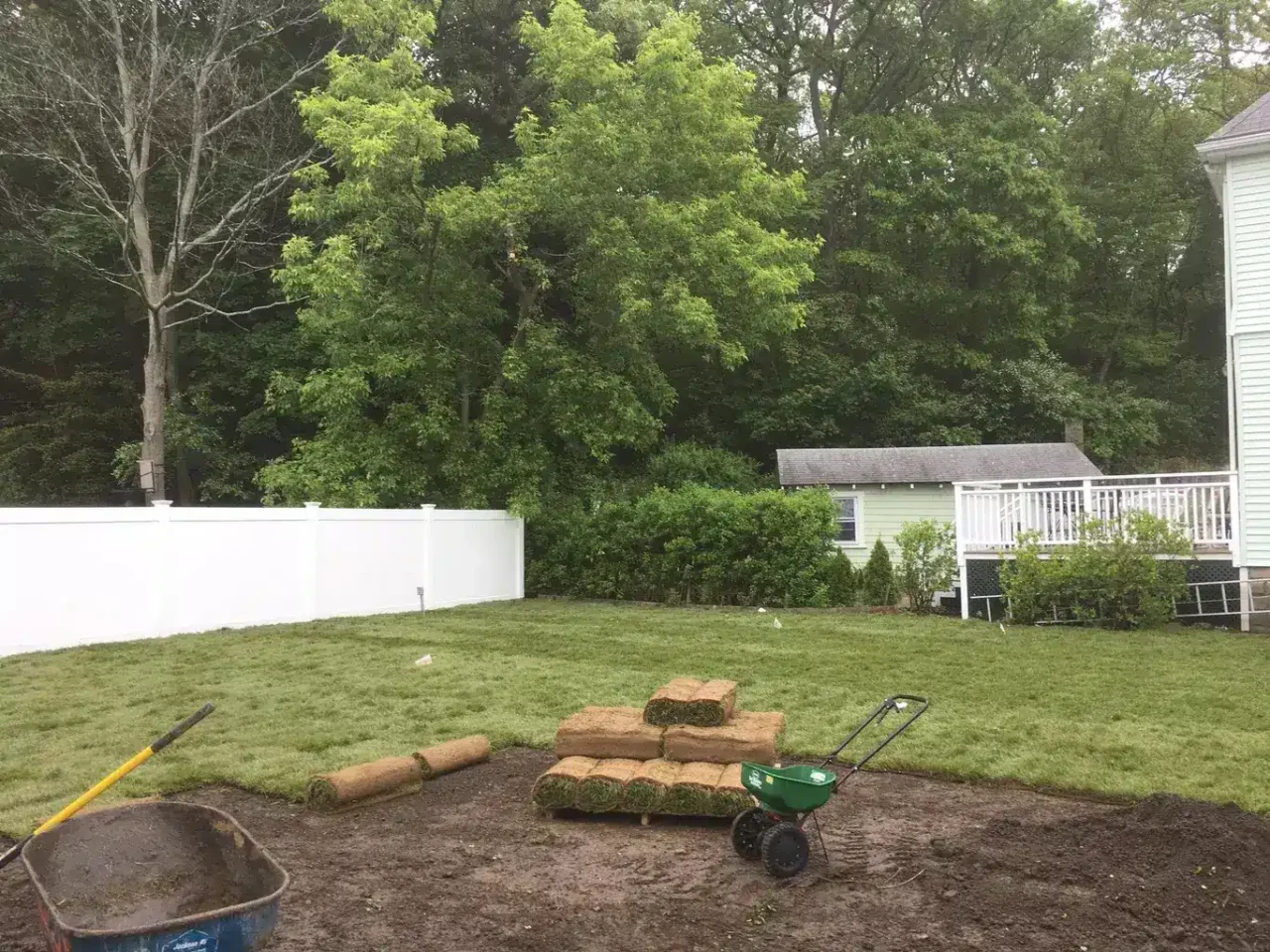
To lay sod in New England, prepare the soil first, install the sod the day it arrives in a staggered brick pattern with tight seams, roll it, and water it right away and every day until the roots take hold. The best time is late summer into early fall, roughly mid-August through September, when the soil is still warm and nights are cool. Spring is the second-best window, as long as you can keep up with watering into early summer.
Zacarias Tree & Landscaping installs and renovates lawns with sod and hydroseed for homeowners in Lynn and across the North Shore. The steps below are the ones that decide whether a new lawn knits into the soil or lifts up like a rug in July.
Why timing matters here
Most lawn sod sold in Massachusetts is cool-season grass, commonly Kentucky bluegrass, often blended with fescue or ryegrass. These grasses root fastest when the soil is warm and the air is mild. Late summer and early fall give that combination, along with fewer weeds competing and usually steadier rain. Sod laid then gets weeks of root growth before winter and starts spring already established.
Spring sod can do well, but its roots have less time before summer heat, so it needs close attention through June and July. Midsummer installs are possible with irrigation, though heat waves make them risky. Once the ground freezes, sod cannot root at all.
Step 1: Prepare the soil
Sod is only as good as what sits under it. Laying it on compacted, rocky, or worn-out soil is the most common reason a new lawn struggles.
- Remove the old lawn and weeds. Strip the existing turf and clear rocks, roots, and debris.
- Test the soil. A soil test shows pH and nutrient levels. Many New England soils run acidic, and lime is a common correction. UMass Extension offers soil testing and lawn guidance for Massachusetts.
- Loosen and amend. Loosen the top several inches and work in compost or screened loam if the soil is thin or sandy.
- Grade. Shape the surface so water runs away from the foundation, with no low spots where it can sit. Rake it smooth, then firm it lightly with a roller so footprints are shallow.
- Set the final height. Prepared soil should sit about an inch below walks and driveways so the finished sod meets them flush.
If a yard has standing water or runoff problems, fix them before any sod goes down. Our grading and drainage work often comes first on a lawn renovation.
Step 2: Install the sod the day it arrives
Sod is alive, and stacked rolls heat up quickly. Schedule delivery for when you are ready to lay, keep pallets in shade, and lightly moisten the soil just before you begin.
- Start along a straight edge, such as a driveway or walk.
- Lay pieces end to end with seams pushed tight, without stretching or overlapping them.
- Stagger the seams of each row like brickwork so short joints never line up.
- Cut around beds, trees, and curves with a sharp knife.
- On slopes, lay rows across the slope and pin each piece with stakes.
- Put full pieces on the outer edges, where small scraps dry out first, and use cut pieces inside.
Step 3: Roll and water immediately
Roll the finished area with a lawn roller about one-third full of water to press the sod into the soil and remove air pockets. Then water thoroughly, until the soil under the sod is wet, and lift a corner to confirm.
A watering schedule for new sod
| Timeframe | Watering | Check |
|---|---|---|
| First 7 to 10 days | Daily, sometimes twice in hot weather, keeping sod and the top inch of soil moist | Lift a corner; the soil beneath should be damp |
| Weeks 2 to 3 | Every other day, running longer each time | Tug gently; resistance means roots are taking hold |
| Weeks 3 to 6 | Two or three deep waterings a week | Footprints spring back and seams stay closed |
| After establishment | About an inch a week from rain and watering combined | Adjust for heat waves and dry spells |
Water early in the morning. Keep people, pets, and play off the new lawn for the first few weeks. Mow for the first time once roots have grabbed, usually after two to three weeks, with a sharp blade set high.
New sod is where an irrigation system pays off fast, since daily watering for two weeks is hard to keep up by hand. Our irrigation guide compares the options.
Sod or hydroseed?
Both make a good lawn. The choice comes down to budget, timing, and how soon you need to use the yard.
- Sod gives an instant lawn, holds slopes against erosion right away, and can be used within a few weeks. It costs more per square foot and needs heavy watering up front.
- Hydroseed is a sprayed mix of seed, mulch, and fertilizer. It usually costs less, lets you pick a seed blend for sun or shade, and covers large areas efficiently, but it takes longer to fill in and depends on the season, ideally late summer to early fall.
Some homeowners thinking about going synthetic are really dealing with a thin, patchy lawn that renovation can fix. If you are weighing that choice, our honest look at artificial grass versus a natural lawn may help.
Frequently asked questions
Can I lay sod over existing grass?
It is not a good idea. Old grass and thatch keep new roots from reaching the soil and break down unevenly underneath. Remove the old lawn and prepare the soil first.
How soon can I walk on new sod?
Keep traffic to watering and the first mow for about two to three weeks. Heavy use, such as play or a party, is best held off until the roots are firmly attached, often around a month or more.
What is the best month to lay sod in Massachusetts?
Late August and September are usually best. Spring, from roughly mid-April into May, is the second choice.
Why is my new sod turning brown?
Most often it is drying out, especially along seams and edges. Lift a corner, and if the soil is dry, water more deeply. Brown patches can also come from sod that sat on the pallet too long before it was laid.
If you would rather have the prep, grading, and install handled, see our lawn installation and renovation service. Pricing depends on square footage, soil work, grading, and access, so the only accurate number is a free on-site estimate. Request a free estimate to get one scheduled.