A white pine should come down when it has a structural problem that pruning cannot fix: a new lean with lifting soil, a dead or dying top, a split between two main stems, or roots sitting in waterlogged ground within reach of the house. If the problem is a few broken or dead limbs, pruning is usually the better and cheaper choice. The cost to cut down a pine tree depends on its size and what it could hit, and a free on-site estimate is the only way to know it for your yard.
Our company, Zacarias Tree & Landscaping, is family-run and has been based in Lynn since 2002. We have ISA-Certified Arborists on staff, and when a tall pine looms over a North Shore house, the question is usually simple: does it have to go? Here is how to think it through.
Why white pine is a special case in New England
Eastern white pine is native, fast-growing, and beautiful, and it is one of the tallest trees you will find on a residential lot here. It also has a few traits that make it more likely than many hardwoods to cause trouble near a house:
- Brittle limbs: white pine wood is soft, and heavy wet snow or ice can snap limbs and tops. After a nor'easter, broken pine limbs hanging in the crown are a common sight.
- Shallow roots in wet soil: on well-drained ground, pines root reasonably well. On soggy or compacted soil, the roots stay shallow, and saturated ground plus high wind can tip a whole tree.
- Multiple tops: the white pine weevil kills the main leader of young pines, and the tree responds by growing two or more competing tops. Decades later, those tops form tight forks that can split.
- Needle problems: white pine needle diseases have caused yellowing and early needle drop across New England in recent years. That thinning looks alarming but does not by itself mean the tree must come down. UMass Extension tracks landscape tree problems in the region.
Signs a pine should come down
- A new or worsening lean, especially with cracked, mounded, or lifting soil on the side opposite the lean.
- A dead top or large sections of the upper crown that have turned brown and stayed that way through a full growing season.
- A split fork between two tops, or a crack running down from the union.
- Decay at the base, such as mushrooms or conks on the root flare, or soft, crumbly wood.
- A history of dropping big limbs onto a roof, car, or play area.
- Root damage from new construction, a driveway, or trenching near the trunk.
Signs pruning is enough
- A few broken limbs, called hangers, left after a storm
- Lower branches that are dead because they are shaded out, which is normal for pines
- Limbs rubbing a roof or siding
- Thinning needles from a seasonal needle disease in an otherwise solid tree
Removing deadwood and hangers and giving clearance from the roof often makes a sound pine much safer for years. Our tree trimming and pruning service covers that work.
Weigh the target, not just the tree
Two pines with the same defect can deserve different answers. A leaning pine at the back edge of a wooded lot might be left alone. The same lean over a bedroom is a different decision. Ask yourself what the tree would hit if it failed: your house, a neighbor's house, a street, a driveway where people park, or empty woods. The more valuable or occupied the target, the lower the bar for removal.
| What you see | Near the house or driveway | Away from targets |
|---|---|---|
| A few storm-broken limbs | Prune promptly | Prune when convenient |
| Dead top | Usually remove | Monitor, or remove the top |
| Split fork between two tops | Arborist assessment soon | Assessment, then decide |
| New lean with lifting soil | Treat as urgent | Keep people clear, assess soon |
| Yellowing needles only | Monitor through the season | Monitor |
What removing a pine costs, in plain terms
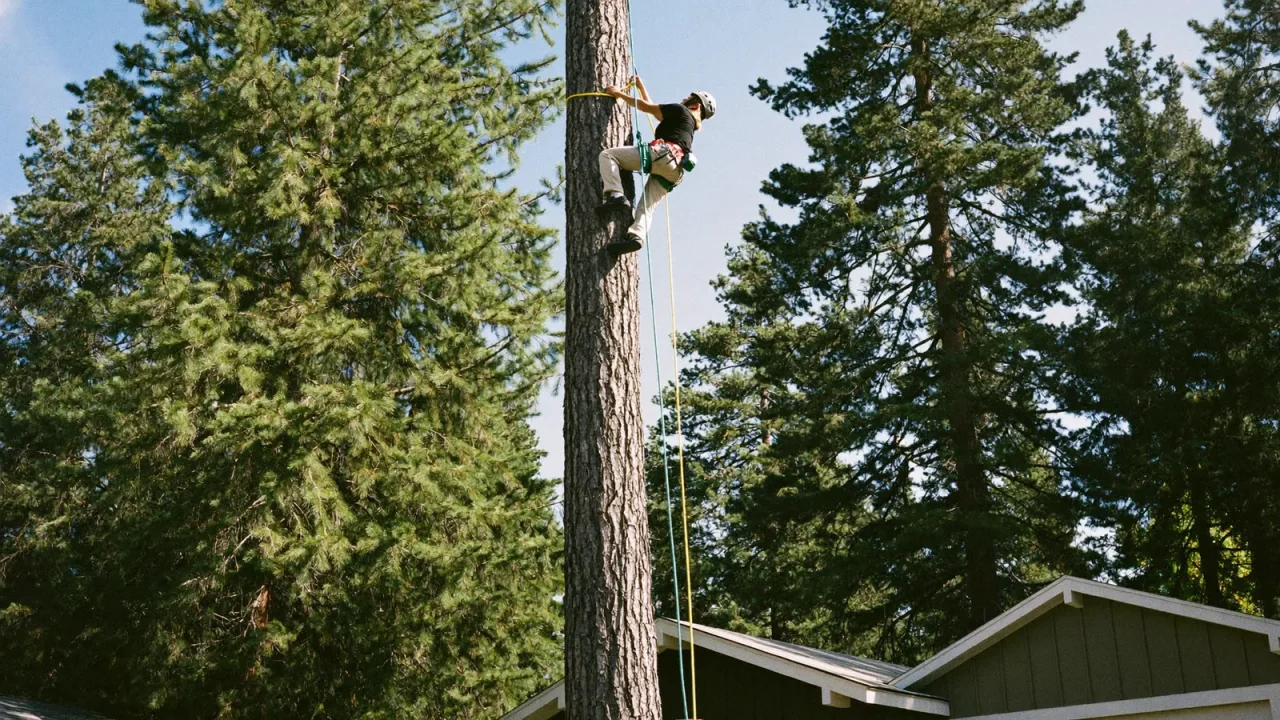
The price follows height, landing space, and condition. A small pine in an open yard is a short job. A tall one over the house has to be taken down in sections on ropes. Our 50-foot pine removal guide explains what a tall conifer job involves step by step, and the tree removal cost guide covers every pricing factor. As a rough pattern across the market, pruning deadwood from a pine usually costs less than removing it, but repeated storm cleanups on a failing tree add up.
Frequently asked questions
How much does it cost to cut down a pine tree near my house?
It depends mostly on height and whether pieces can be dropped or must be lowered by rope. Pines over a roof cost more because every section is rigged. A free on-site estimate gives the real number.
Are white pines dangerous to have near a house?
A healthy, well-rooted pine is not automatically dangerous. The risk rises with a lean, a dead top, a split fork, or wet shallow roots. Those are the trees worth having assessed.
Why are the needles on my pine turning yellow?
Some yellowing inside the crown each fall is normal needle shed. Heavy yellowing in late spring or early summer can point to a needle disease or drought stress. It is worth watching, but it does not always mean removal.
Can a leaning pine be saved?
A pine that has leaned the same way for years has often adapted and may be fine. A lean that is new or getting worse, especially after a storm, is a warning sign and should be checked.
Not sure about your pine?
If you cannot tell whether your pine is a pruning job or a removal, an assessment answers that before you spend money on either. See our arborist services or our tree removal service, and request a free estimate. We usually schedule visits the same day.