
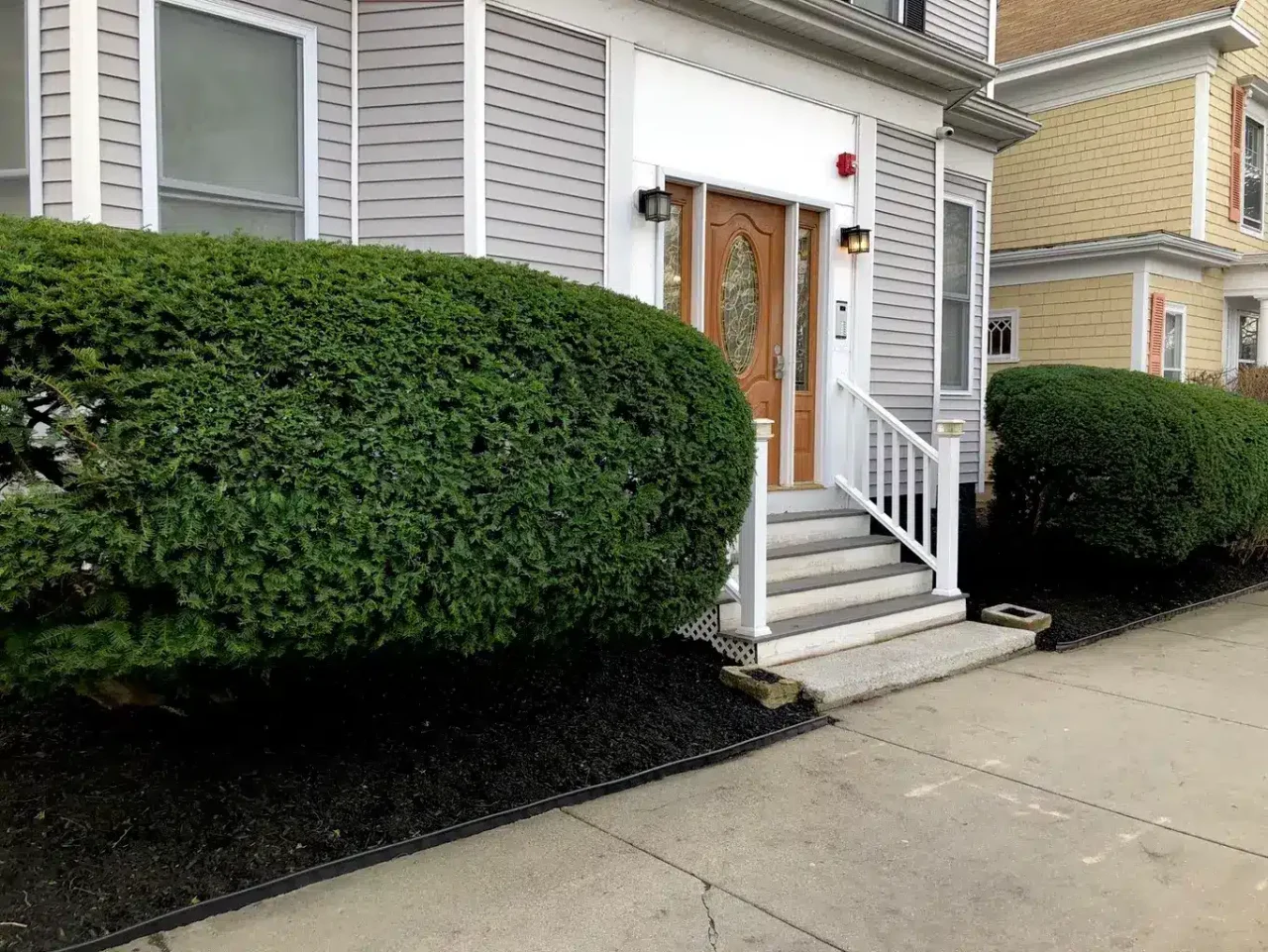
Leylandii cutting prices depend on one decision first: are you trimming a healthy hedge to keep its size, or is the row too tall, too wide, or too damaged to save? Regular trimming of a manageable Leyland cypress hedge is usually the less expensive path, while cutting back an overgrown row by a large amount or removing it entirely costs more because of height, brush volume, and disposal. The only accurate number is a free on-site estimate, and this guide helps you decide which job you actually need.
Zacarias Tree & Landscaping, a family company in Lynn since 2002, prunes and removes hedges and trees across the North Shore with ISA-Certified Arborists on staff. Leyland cypress, often called Leylandii, is popular for fast privacy screens, and in New England it comes with a few problems you should know about before you pay to cut it.
Why Leyland cypress behaves differently here
Leyland cypress grows fast and dense, which is why people plant it. In our climate it also sits near the cold end of where it grows comfortably, so winters test it. You can check your own hardiness zone on the USDA Plant Hardiness Zone Map. Three local stresses show up again and again:
- Winter burn: cold, dry wind and winter sun pull moisture from the foliage while the ground is frozen, leaving brown patches on the exposed side. Coastal wind and road salt spray make it worse.
- Snow and ice load: heavy wet snow from a nor'easter can bend the upright stems outward, splaying the hedge open or snapping leaders.
- Canker and dieback: stressed Leyland cypress is prone to canker diseases that kill individual branches, leaving dead gaps that do not fill back in.
The rule that decides everything: do not cut into bare wood
Like many conifers, Leyland cypress does not grow new foliage from old, brown, needle-less wood. If you cut a branch back past its green growth, that section usually stays bare. This is why a hedge that has been left to grow wide for years cannot simply be sheared back to its old size without leaving brown holes. It is also the single most important point when comparing cut back versus remove.
Cutting back: when it works
- The hedge is healthy and green through most of its depth.
- You want to reduce height or width by a modest amount, staying within green growth.
- The row has only a few dead patches, not long bare sections.
- The hedge is still at a height a crew can reach from the ground or a short platform.
Regular trimming once or twice a year keeps a Leyland hedge in shape and costs far less over time than rescuing an overgrown one. Height reduction on a tall hedge is possible, since the top can be cut down to a set height, but the flat top will fill in slowly and may look rough for a season or two.
Removing: when it makes more sense
- The hedge has grown far wider than the space, and cutting back would expose bare wood.
- Large sections are brown from winter burn or canker and have not recovered.
- Snow load has split or splayed the stems so the row no longer holds shape.
- The hedge is shading out a lawn, crowding a driveway, or growing into wires.
- Individual trees have grown into tall single trunks that behave more like trees than hedge.
Removing a hedge row often costs more up front than one trim, but it can end years of repeated cutting on a screen that no longer works. Replacing it with a slower, better-suited hedge species is often the long-term answer. Our Emerald Green arborvitae trimming guide covers one common alternative and how to keep it healthy.
What drives the cost of a hedge row
| Cost driver | Trimming | Removal |
|---|---|---|
| Height | Tall hedges need ladders, platforms, or a lift | Tall trees may need climbing or rigging |
| Length of the row | More linear feet, more time | More trees to fell and process |
| Density and width | Thick growth takes longer to shape | More brush to chip and haul |
| Access | Fences, beds, and neighbors on both sides | Room for the chipper and truck |
| Disposal | Clippings raked, bagged, or chipped | Large brush volume plus trunks |
| Stumps | Not applicable | Several stumps in a line to grind |
For single-tree removal pricing by size and species, see our tree removal cost guide.
When to schedule the work
Light trimming is often done in late spring after new growth starts, with a second light trim in summer if needed. Avoid heavy cutting late in the season, since fresh cuts heading into winter leave the hedge more open to winter burn. Removal can happen almost any time of year.
Frequently asked questions
How much does it cost to cut back Leylandii?
It depends on height, row length, how much is removed, and disposal. Routine trimming of a manageable hedge is usually the least expensive option. Cutting back a very tall, overgrown row costs more. A free on-site estimate gives the real figure.
Can I cut Leylandii back hard?
Not into bare, brown wood. It rarely regrows from there. You can reduce height, but keep side cuts within green growth.
Why is my Leyland cypress turning brown?
Common causes here are winter burn on the windward side, canker disease killing individual branches, and drought stress. Branch-by-branch dieback is worth having an arborist look at.
Is it better to remove a Leylandii hedge and replant?
If much of the row is bare or brown, often yes. A healthier, better-suited hedge species usually looks better sooner than a struggling cypress.
Get a hedge estimate
We will look at the row, tell you honestly whether trimming or removal makes sense, and price it clearly. See our tree trimming and pruning service, and request a free estimate. When a row needs to come out, our tree removal crews handle that too.