
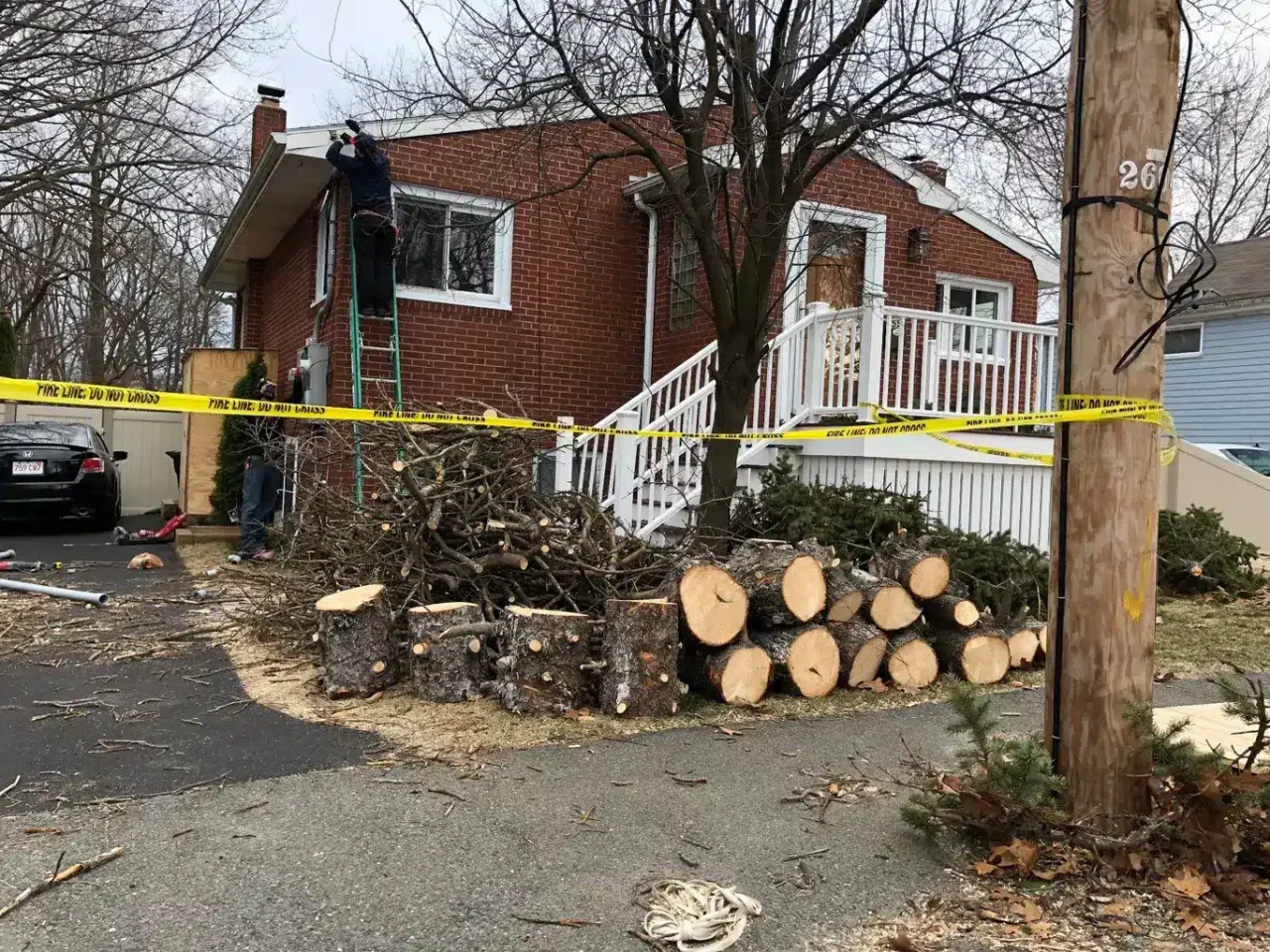
For most North Shore homeowners, land clearing prices really mean the cost of removing a group of trees and the brush around them from one part of the yard, for a new lawn, a garden, a patio, or an addition. That cost is set by how many trees come out, how big they are, how close they sit to the house or wires, how much brush and how many stumps are involved, and whether the ground needs grading afterward. Because every yard is different, the only accurate number is a free on-site estimate.
A note on scope: Zacarias Tree & Landscaping, a family-run company based in Lynn since 2002, works for homeowners and businesses on developed properties. Clearing acreage or preparing raw land for new construction is not among our services. What we offer is tree removal, stump grinding, and landscaping on existing home lots, which covers what most homeowners searching for land clearing actually need.
What "clearing part of a lot" usually looks like
Typical partial-lot projects around Essex and Middlesex Counties include:
- Opening up a shaded back corner overgrown with young maples, white pine, and buckthorn so it can become lawn.
- Clearing a strip along the property line that has filled in with saplings and vines.
- Removing several trees and their stumps to make room for a patio, shed, garage, or home addition.
- Taking out storm-damaged or dying trees, such as ash killed by emerald ash borer, along with the understory that grew up around them.
Each of these is really three jobs stacked together: removing trees, removing brush, and dealing with stumps and the ground left behind.
How the size of the job changes the price
Because partial-lot clearing is really several tree removals plus brush work, the most honest way to think about land clearing prices is by what is actually coming out. Each step down this list adds a new kind of work, not just more of the same:
| What is being cleared | What the job usually involves | What moves the price within it |
|---|---|---|
| Brush, vines, and saplings only | Cutting, dragging, and chipping by hand, with no climbing | The size of the area, how dense it is, thorny invasives or poison ivy, and how far brush has to be dragged to the chipper |
| A few small or mid-size trees plus brush | Felling where there is room, a handful of stumps, chipping | Whether each tree can drop into open ground, plus the number and width of the stumps |
| Several mature trees, some near the house, fence, or wires | Sectional removal and rigging, many stumps ground, heavy hauling | Climbing and rigging time for each tree, whether a lift or crane is needed, and the volume of wood to process |
| Any of the above, finished as lawn or a patio base | Grading, topsoil, and seed or sod after the clearing | Priced as separate landscaping work, based on the area and how uneven the ground is |
Two yards that look alike can land in different rows once the estimator counts the trees, measures the stumps, and checks the access. The only accurate number for your project is a free on-site estimate.
What drives the price
| Factor | Pushes cost down | Pushes cost up |
|---|---|---|
| Tree size | Mostly saplings and small trees | Several mature oaks, maples, or tall pines |
| Targets nearby | Open ground where trees can be felled | House, fence, garage, or wires within reach |
| Access | Wide gate or open side yard for the chipper | Backyard reachable only by hand carry or crane |
| Brush density | Light undergrowth | Thick thickets, vines, and thorny invasives |
| Stumps | Stumps left or cut flush | Many stumps ground below grade |
| Wood and debris | Firewood left on site, chips spread in place | Everything hauled away |
| Ground after clearing | Left rough for later | Graded and prepared for lawn or hardscape |
The trees set most of the price
Clearing ten saplings is a very different job from removing three mature trees near the house. Large hardwoods such as red oak are heavy and slow to process. Tall white pines often have to be climbed and taken down in sections. Any tree that cannot simply be felled into open space adds rigging time. Our tree removal cost guide covers how height, species, and access affect each tree.
Brush adds labor, not just volume
Brush is cut, dragged, and chipped by hand, so dense growth takes time even when nothing is large. Thorny invasives such as multiflora rose, and vines like oriental bittersweet wrapped through the canopy, slow the work further. Poison ivy is common in overgrown North Shore yards and needs extra care. We cover that side of the job in our guide to professional brush clearing.
Stumps decide what you can do next
If the cleared area will become lawn or planting beds, stumps usually need grinding below grade. If it will stay natural, cutting them low may be enough. Many stumps in a small area add up, and rocky New England soil can slow grinding.
What happens to the ground
Once trees and brush are gone, the soil is often uneven, full of roots and grinding chips, and sometimes wetter than expected because the trees were using that water. If you plan a lawn, budget for grading, topsoil, and seed or sod. Our grading and drainage and lawn installation services pick up where the clearing ends.
Permits and rules to check first
- Wetlands. Clearing near a stream, pond, marsh, or other wetland may need approval from your town's conservation commission before any work begins.
- Public shade trees. Trees on the town's side of the property line, often near the street, fall under the town tree warden.
- Local bylaws. Some towns have tree protection or site clearing rules, especially when a building project is involved. Ask your building department.
- Underground utilities. Grinding stumps and grading are excavation. Massachusetts requires notice through Dig Safe before digging.
Ways to keep the cost reasonable
- Clear only what the project needs. Keeping healthy mature trees at the edge of the area saves money and keeps shade and privacy.
- Keep the wood. If you burn firewood, having rounds left on site reduces hauling.
- Bundle the work. One visit that covers removal, brush, and stumps costs less than three separate trips.
- Time it well. Late fall and winter, with the leaves down, can make brush easier to see and cut. Poison ivy vines still carry their oil in winter, so the care stays the same.
- Do not expect timber money. Yard trees rarely pay for their own removal. Our article on selling trees to a lumber company explains why.
What a good clearing quote includes
A clear quote lists which trees come out (ideally marked with tape at the walkthrough), how brush will be handled, how many stumps will be ground and how deep, whether wood and chips stay or go, and what condition the ground is left in. When you compare two quotes, line those items up side by side; a quote that leaves out stump grinding or says nothing about the ground is describing a smaller job, not a cheaper one. At Zacarias, cleanup and haul-away are included on every job, so they are part of the written price rather than an add-on. Our estimates are free and written, they are covered by our No-Surprise Pricing Guarantee.
Frequently Asked Questions
How much does it cost to clear part of a backyard?
The trees set most of it. A patch of saplings and brush that can be cut by hand is the lightest kind of clearing, while each mature tree that has to be climbed and lowered in sections near the house adds far more time and equipment than the brush around it. Stump grinding and any grading for a lawn come on top. Mark the trees you want gone with tape before the visit, and a free on-site estimate will give you the real number in writing.
Do you clear land for new construction?
No. Our work is on existing, developed properties such as home lots: removing trees, brush, and stumps from part of a lot, and then lawn, planting, grading, or hardscaping if you want the space finished.
Can I clear the brush myself and hire out only the trees?
Yes, many homeowners do. Leave the trees, anything near wires, and any poison ivy you cannot identify confidently to the professionals.
Will the area be ready for grass right away?
Usually not. Expect grinding chips, roots, and uneven soil. Grading and new topsoil are normally needed before seed or sod.
Plan your clearing project
If part of your yard has filled in with trees and brush, request a free estimate. Our ISA-Certified Arborists can assess the trees and give you a free, written estimate, usually scheduled the same day. We are licensed, bonded, and fully insured, and we serve Lynn, the North Shore, and Essex and Middlesex Counties.