To prepare for choosing a tree planting location, record what you want the tree to do, where you might put it, what you have observed about those areas, and what remains unknown. Bring a rough sketch and safely obtained photographs to the arborist’s visit. Your goal is a useful comparison of possible locations, not a final planting plan.
Start with the benefit, not a planting dot
Describe the result you want: shade over a sitting area, screening from a particular viewpoint, a focal point visible from a window, or another clear goal. Identify where that benefit matters and, when relevant, when you want it. “Shade where we sit in the afternoon” communicates more than “a tree in the backyard.”
Include what you want to keep unchanged, such as an open play area, a view, an existing garden, or a route through the yard. If your goals compete, explain which takes priority. Leave the species choice open while you discuss the location.
Sketch candidate areas and nearby features
Draw a simple yard outline and label possible planting areas with letters. Use the same labels on your notes and photographs. Mark areas rather than exact trunk positions so the discussion can include alternatives.
- Show the house, garage, fences, paths, driveway, patio, and entrances.
- Add existing trees, shrubs, beds, and features you want to preserve.
- Note overhead wires and visible utility features from a safe position. Include existing utility or property records if available, labeled as records rather than confirmed clearances.
- Mark planned changes, such as a future patio or driveway project. Label uncertain boundaries and other unknowns instead of guessing.
Record observations without turning them into conclusions
For sunlight, note when you observed each area, whether it was sunny or shaded, and the season. For water, describe where you have seen puddles or runoff and the circumstances. Record exposure you have noticed, such as wind across an open area or snow routinely piled beside a driveway. If you have not observed a condition, write “unknown.”
Keep the wording literal: “I saw standing water here after rain” rather than “this soil cannot support a tree.” A sunny photograph is not a complete sunlight record, and an apparently open patch does not establish underground clearance, soil suitability, or planting feasibility.
Copy this location-comparison worksheet
Repeat these prompts for each candidate area. Keep observations and assessment questions separate; you do not need to rank the locations before the visit.
| Topic | What to record | What to ask |
|---|---|---|
| Goal | Area label, desired benefit, and the viewpoint or activity that matters. | Could a tree here serve this goal, or should we consider another area? |
| Sunlight | Observed sun and shade, with time and season noted. | What further information is needed before discussing suitable trees? |
| Water and exposure | Visible puddles, runoff, wind exposure, or snow-storage areas you have noticed. | Do these observations call for further evaluation or site testing? |
| Surroundings | Nearby structures, pavement, existing plants, and planned projects. | How should mature canopy and root-space needs be assessed here? |
| Utilities and boundaries | Visible features, available records, and uncertainties. | What utility-location steps, clearances, boundaries, and applicable approvals must be confirmed before work? |
| Access | Gates, narrow passages, steps, slopes, and areas that must remain accessible. | What access constraints need evaluation before installation planning? |
Photograph the context safely
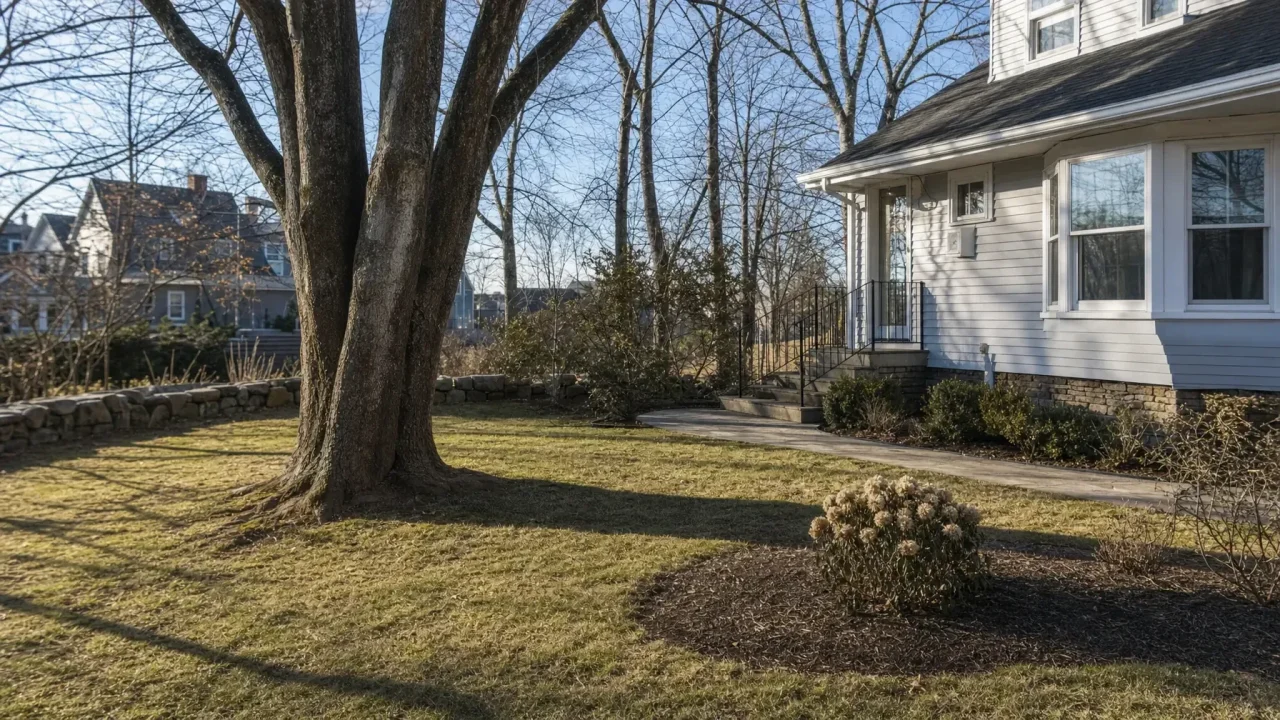
From safe, accessible positions, take overview photographs showing each candidate area and its surroundings. Include the window, seating area, or view connected to your goal, plus the apparent access route. Label images with the area letter, viewpoint, and when they were taken.
Note Skip any photograph or observation that requires climbing, approaching wires, standing beneath damaged limbs, or entering a hazardous area. Do not dig, probe for utilities, or cut roots to investigate a potential planting spot.
Bring a brief, not a finished design
Bring your sketch, comparison notes, photographs, and available records. Ask how mature canopy and root-space needs affect the alternatives rather than treating visible empty space as proof of fit. Leave species suitability, final placement, clearances, site testing, and installation planning unresolved until evaluated. Ask what the visit can establish and what still needs confirmation.
Zacarias Tree & Landscaping provides tree services in Lynn and across Essex and Middlesex Counties. Use the tree-services page to start a conversation about your property, and review the tree-planting page for planting-specific information.