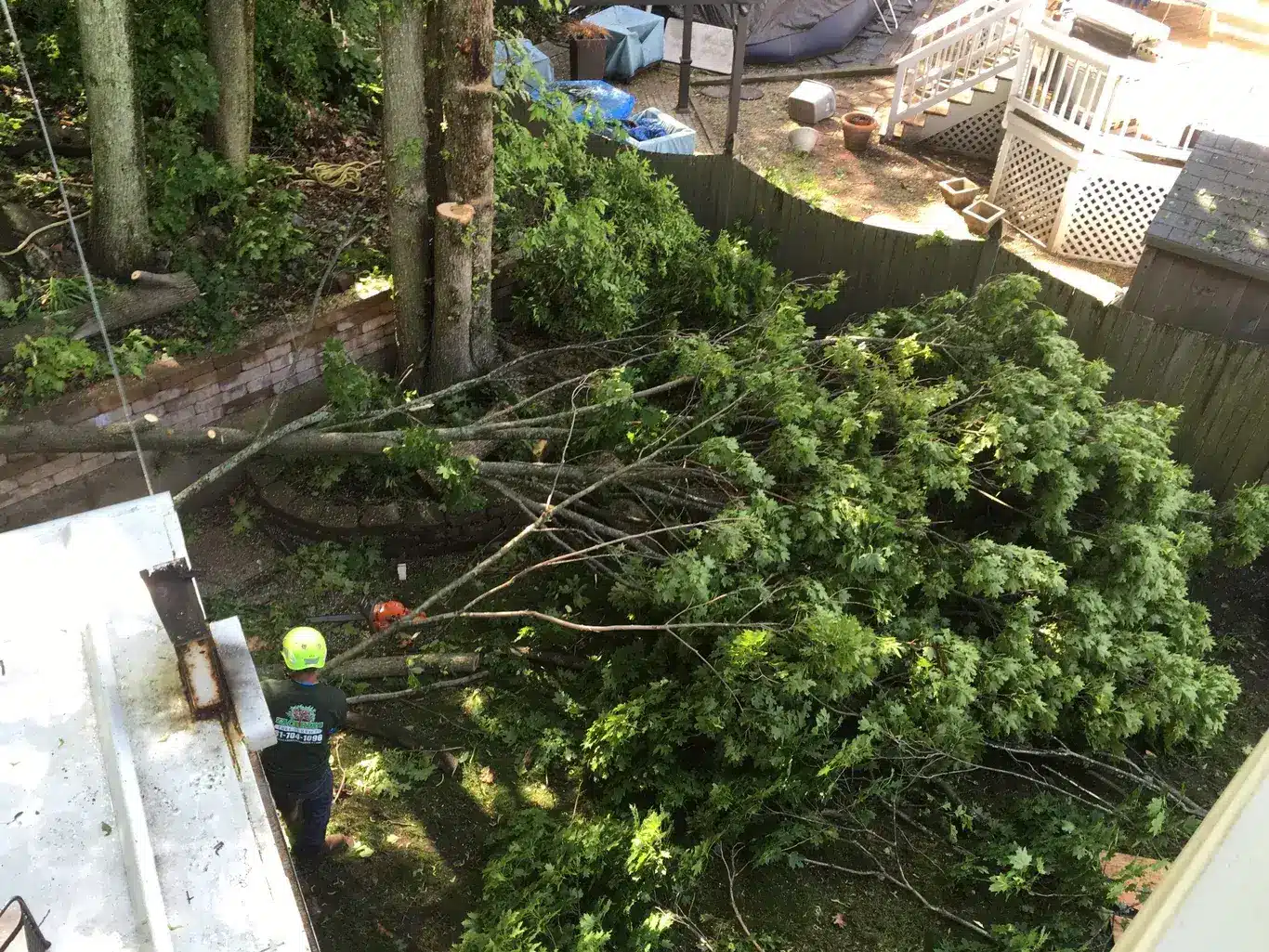
The average cost of cutting tree down falls somewhere between $400 and $2,000 for most homeowners — but the real number depends heavily on your specific situation.
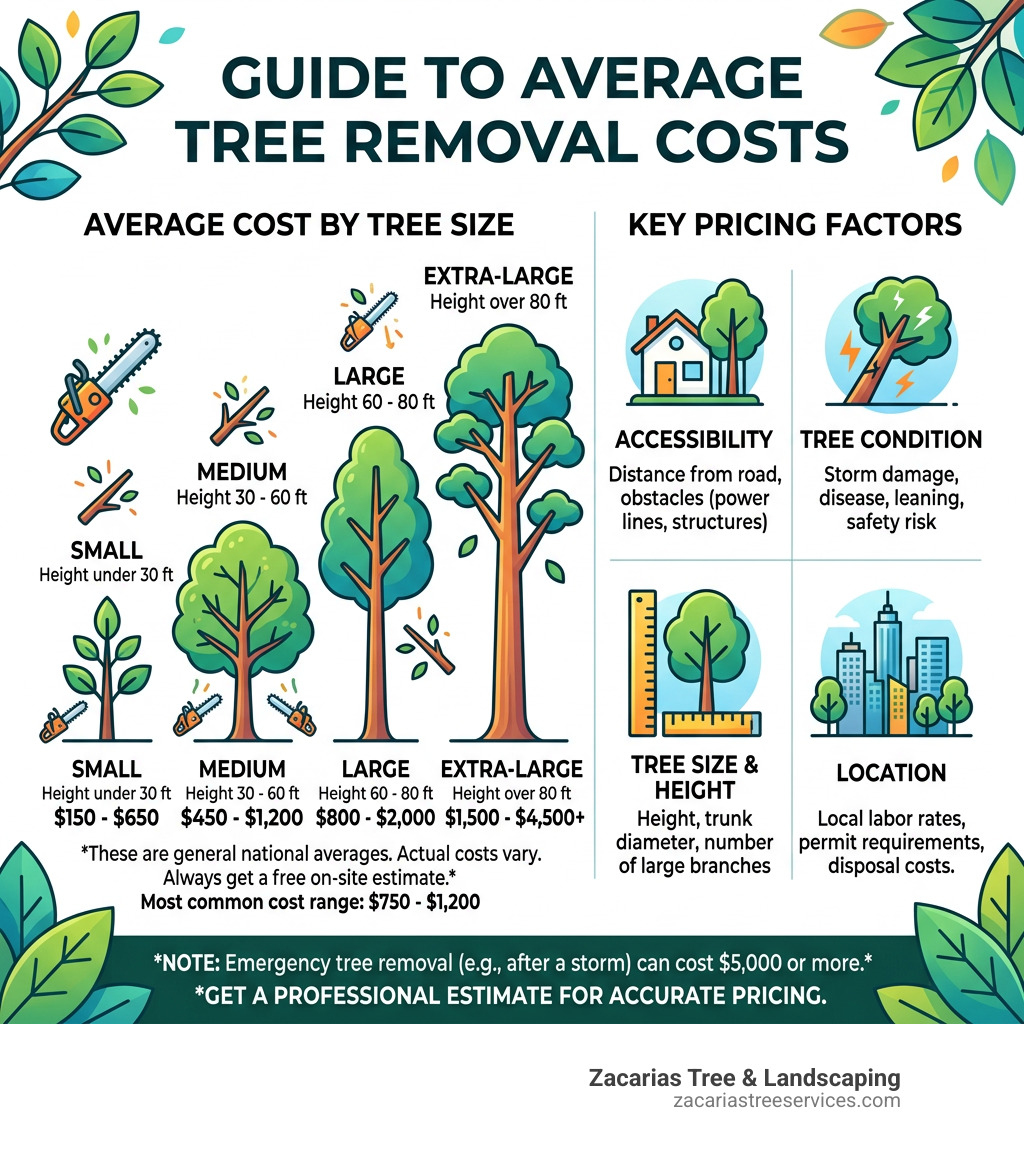
Here’s a quick snapshot of typical costs based on tree size:
| Tree Size | Height | Estimated Cost Range |
|---|---|---|
| Small | Under 30 ft | $150 – $650 |
| Medium | 30 – 60 ft | $450 – $1,200 |
| Large | 60 – 80 ft | $800 – $2,000 |
| Extra-Large | Over 80 ft | $1,500 – $4,500+ |
Note: These are general national averages based on internet research. Actual costs vary based on your property, tree condition, access, and local labor rates. Always get a free on-site estimate for accurate pricing.
Most homeowners pay around $750 to $1,200 for a standard removal. Emergency removals — like after a storm knocks a tree onto your property — can push costs to $5,000 or more.
A tree in your backyard might seem simple to deal with. But once it’s damaged, leaning, or diseased, it becomes a safety problem first and a budget question second. Whether you’re dealing with a storm-damaged oak threatening your roof or a dying pine crowding your yard, knowing what drives removal costs helps you plan smarter and act faster.
This guide breaks down everything Massachusetts homeowners need to know — from size-based pricing to permits, stump grinding, and when to call for emergency service.
When you hear the word “Timber!” it’s usually followed by a very loud thud. Our goal at Zacarias Tree & Landscaping is to make sure that thud happens exactly where we planned it, far away from your sunroom or your neighbor’s prize-winning rose bushes. But before the saw starts buzzing, most homeowners in places like Arlington, MA or Newton, MA want to know: “What is this going to run me?”
The average cost of cutting tree down isn’t a single flat fee because no two trees are identical. Think of it like a haircut; a quick trim for a toddler is one price, but a full color, cut, and style for someone with hair down to their waist is a whole different story. In the tree world, “style” involves chainsaws, wood chippers, and sometimes massive cranes.
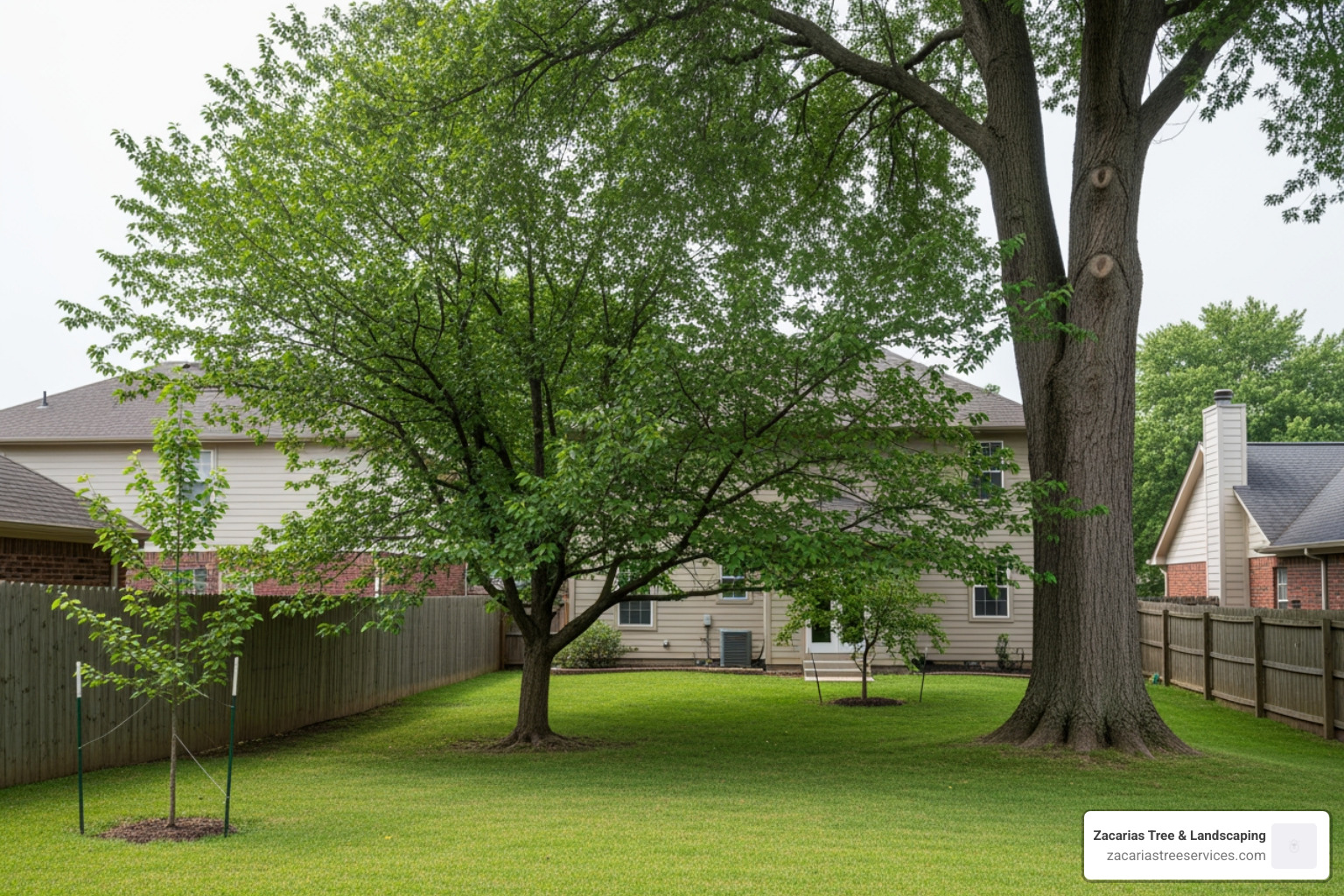
National data from sources like HomeAdvisor suggests that the national average ranges from $722 to $2,068. However, here in Massachusetts, labor markets and disposal regulations can shift those numbers. We see a lot of variation depending on whether we are working in the dense urban streets of Cambridge or the more spacious yards of Concord or Boxford.
Site complexity is the biggest “hidden” driver of price. A tree standing in the middle of a five-acre field is a breeze. A tree sandwiched between a power line and a swimming pool in Somerville is a high-stakes puzzle. For a deeper dive into how these estimates are built, check out our Beginner’s Guide to Tree Service Removal Cost.
Small trees are generally defined as those under 30 feet tall. These are often ornamental species like dogwoods, Japanese maples, or small fruit trees. If the tree is healthy and easily accessible, you might see prices ranging from $150 to $650.
Because these trees are smaller, they require less heavy machinery and fewer crew members. In many cases, we don’t need to climb them or use a bucket truck; we can often manage the removal from the ground. However, even a small tree can be pricey if it’s dead and brittle, as it becomes a safety hazard to remove.
This is where the math gets interesting. Once a tree crosses the 60-foot mark — like a mature White Oak or a towering White Pine — the complexity skyrockets. For these giants, the average cost of cutting tree down typically ranges from $800 to $4,500 or more.
Why the big jump? It comes down to physics and safety. A 100-foot tree can’t just be “felled” like a cartoon character would do it. We have to take it down piece by piece. This often requires:
In towns like Lexington or Andover, where historic trees are common, these removals are a true craft. The equipment alone can be expensive to move; some pros note that just delivering a 120-foot lift to a job site can cost several hundred dollars before the first branch is even cut.
If you’ve ever wondered why your neighbor got their tree removed for $600 while your quote was $1,500, it usually boils down to a few specific variables. We look at every tree through a lens of risk and resources.
Tree health is a major factor. You might think a dead tree is easier to cut because it’s “lighter,” but the opposite is often true. Dead wood is unpredictable. It can snap without warning, making it much more dangerous for our climbers. If a tree is riddled with decay or root rot, we have to take extra precautions, which adds to the time and labor involved. Our full suite of Tree Services includes health assessments to determine if removal is truly necessary or if the tree can be saved.
Size isn’t just about height; it’s also about girth. Professionals measure “Diameter at Breast Height” (DBH). A tree with a massive, thick trunk takes significantly longer to cut and process through a chipper than a tall, skinny one.
Species matters too. Hardwoods like Oak, Maple, and Hickory are much denser than softwoods like Pine or Cedar. Denser wood:
If you’re curious about how your specific tree might stack up, you can play around with tree removal cost calculators online, but keep in mind they can’t see the power lines or the shed sitting right under your branches!
Location, location, location. It’s the golden rule of real estate, and it’s the silver rule of tree removal.
When you get a quote for the average cost of cutting tree down, make sure you know what’s included. Does it include taking the wood away? Does it include the stump? Here are the extras that can catch homeowners off guard.
Most standard removals involve cutting the tree down to a stump a few inches above the ground. If you want that stump gone so you can plant grass or a new garden, you’re looking at stump grinding. This typically adds $100 to $500 depending on the diameter of the stump. Some people try DIY stump removal tactics like chemicals or digging, but for large Massachusetts hardwoods, a professional grinder is usually the only way to get the job done before the next century.
Other add-ons include:
Our team at Zacarias Tree & Landscaping prides itself on thorough cleanup. We don’t believe a job is done until your yard looks better than we found it. You can learn more about our full process on our Tree Removal service page.
In Massachusetts, you can’t always just start cutting. Many municipalities have strict bylaws regarding tree removal, especially for “Heritage Trees” or trees in historic districts.
If you’re building a new home or clearing a lot in a place like Groton or Pepperell, you aren’t looking at a per-tree price. Instead, you’ll likely be quoted per acre.
The good news? If you have three or four trees that need to come down at once, most companies (ourselves included!) offer volume discounts. It’s much cheaper for us to bring the heavy equipment out once for four trees than it is to make four separate trips.
There is a big difference between “I’d like this tree gone by next month” and “There is a pine tree sitting in my living room.”
Emergency removals usually happen after one of our famous New England Nor’easters or ice storms. When a tree is structurally compromised and posing an immediate threat to life or property, it becomes a priority. However, that priority comes with a premium. Emergency services can cost 25% to 50% more than a scheduled job because they require crews to work after hours, in dangerous weather, and with immediate dispatch.
If you find yourself in a “timber” situation at 2:00 AM, check out our Emergency Tree Removal: The Homeowner’s 24-Hour Survival Guide for immediate steps to take. We offer rapid-response Emergency Tree Service across our entire Massachusetts service area.
The question everyone asks after a storm: “Will my insurance pay for this?” The answer is usually: Maybe.
If you want to save money on the average cost of cutting tree down, timing is everything. Winter is often the “off-season” for tree work, but it’s actually one of the best times to get it done in Massachusetts.
As mentioned, the winter months (January through March) are typically the most budget-friendly. Most companies are looking to keep their crews busy during the colder months and may offer “dormant season” discounts. Plus, it’s easier for us to see the structure of the tree without the foliage in the way!
Don’t wait for a storm to tell you a tree is done. Look for these “red flags”:
In a word: No. We love a good DIY project as much as the next person — maybe painting a room or building a bookshelf. But tree removal involves massive weights, unpredictable tension in branches, and dangerous power tools.
Understanding the average cost of cutting tree down helps you budget for your property’s safety and beauty, but the numbers are only part of the story. Whether you are in Billerica, Framingham, or Weymouth, you need a partner who understands the local landscape and the specific needs of Massachusetts homeowners.
At Zacarias Tree & Landscaping, we focus on providing a rapid response and quick, accurate estimates. We know your time is valuable, which is why we emphasize efficient work and a cleanup so thorough you’ll forget we were even there (except for the missing tree, of course!).
From small ornamental trims to massive crane-assisted removals, we have the expertise and the local knowledge to get the job done right. Don’t wait for the next big storm to turn a “maybe” into an “emergency.”
Ready to clear the way for a safer, more beautiful yard? Contact us today for a professional consultation and a clear, honest quote on your next Tree Removal project. We serve over 100 communities across Massachusetts, bringing professional care to every branch and every backyard.
Need a pro? Zacarias Tree & Landscaping provides licensed, insured, and expert care across Lynn, Essex, and Middlesex Counties.
We live by a simple promise: Clear scope. Clear plan. Clean finish.
From emergency removals to seasonal landscaping, we’ve been Lynn’s trusted choice since 2002. Safety-first standards. Total site cleanup. Every time.