
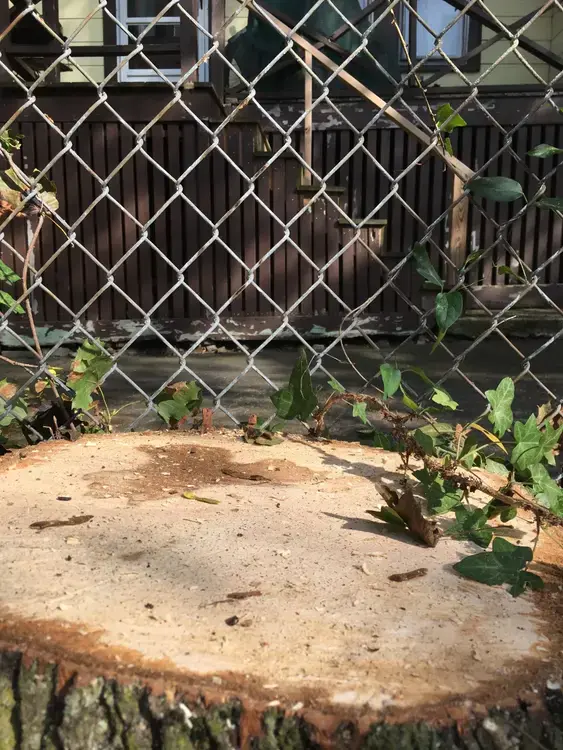
Stump grinding shreds the stump into chips below ground level and leaves the roots to decay where they are. Full stump removal pulls the stump and its main root mass out of the ground, which leaves a large hole to fill. For most lawns and planting beds, grinding is the better choice; full removal earns its extra cost when you are building, paving, or planting in the exact spot where the tree stood.
Which method is right depends less on the stump and more on what you plan to do with that patch of ground next. Zacarias Tree & Landscaping has handled stumps for homeowners in Lynn and throughout Essex and Middlesex Counties for more than two decades, and the questions below are the same ones our estimators work through on site.
What grinding leaves behind
A stump grinder is a machine with a spinning, toothed wheel that sweeps back and forth across the stump, cutting it down a little at a time. When the operator finishes, you are left with three things:
- A pile of chips and soil. It is usually much bigger than the stump looked, because ground wood fluffs up. Some homeowners use the chips as mulch; others want them hauled away or used to backfill.
- A shallow depression where the stump was, which settles further as leftover wood decays.
- Roots outside the grinding area. Big surface roots that snake across the lawn can be ground separately, but deeper roots stay put and rot over the following years.
How deep should a stump be ground?
Depth should match the next use. For new grass, a few inches below grade with fresh loam on top is usually enough. A planting bed may call for a bit more. If a walkway, patio, or shed will sit on the spot, deeper grinding or full removal is safer, because buried wood keeps breaking down and the surface above it can sink. Say what you plan before the work starts so the operator grinds to the right depth.
What full extraction involves
Full removal means digging or pulling out the stump with its root ball, usually with an excavator on larger stumps. It gets the wood out of the ground, but it has real side effects:
- A hole several feet across that needs clean fill and loam
- Heavy equipment crossing the lawn, which can leave ruts in soft ground
- More time, more labor, and a higher price than grinding
- A greater chance of disturbing buried lines, irrigation, or nearby roots of trees you want to keep
Those trade-offs make sense for foundations, additions, driveways, and hardscape. For a lawn, they usually do not.
Side by side
| Factor | Stump grinding | Full extraction |
|---|---|---|
| What stays in the ground | Roots below and beyond the grind area | Only small roots left behind |
| Lawn disturbance | Limited to the stump area and machine path | Large hole plus equipment tracks |
| Time on site | Often well under a day for a typical yard | Longer, with backfill work |
| Relative cost | Lower | Higher |
| Best fit | Lawns, beds, most replanting | Construction, paving, patios, driveways |
Replanting where a stump used to be
Many people want a new tree where the old one stood. It is possible, but a few habits make it work:
- Shift the planting spot a few feet if you can, so the new tree roots into real soil instead of old wood and chips.
- Remove the chips from the planting hole and replace them with soil. Fresh wood chips mixed into soil tie up nitrogen as they decay, which can starve a young tree.
- Pick the right species for the spot. If the old tree came down because it outgrew the space, choose something that fits at maturity. Our tree planting crews can help with selection and installation.
For grass, rake out most of the chips, add a few inches of loam, and seed or sod. If a whole section of yard needs work after tree removal, lawn installation and renovation can take the area from bare soil to finished turf.
Things that surprise homeowners after grinding
- Mushrooms often pop up over buried roots for a few seasons. They are a sign of normal decay.
- Settling happens as wood breaks down. Top off low spots with loam in spring.
- Sprouts can appear from roots of vigorous species such as black locust or tree of heaven. Cutting sprouts repeatedly wears the roots out.
How to hire for reliable stump removal
A reliable stump contractor answers these questions before work starts, and puts the answers in a written quote:
- How deep will you grind, and does that suit what I plan to put here?
- Are surface roots included, or priced separately?
- What happens to the chips: left on site, used as backfill, or hauled away?
- Will you request Dig Safe markings before grinding? Grinders cut below grade, so utility lines matter.
- How will you protect windows, cars, and siding from flying debris?
- Can you show proof of liability insurance and workers' compensation?
If price is your main question, our guide to what sets the price of stump grinding breaks down the cost factors. If you are thinking of doing it yourself, start with how to remove a tree stump by hand.
Frequently asked questions
Is stump grinding as good as pulling the stump out?
For lawns and most garden areas, yes. Grinding removes the visible stump and enough wood below grade to grow grass or plants on top. Full removal is only better when something structural or paved will go over the spot.
Will roots grow back after a stump is ground?
Most species will not regrow once the stump and root crown are ground out. A few vigorous species can send up sprouts from leftover roots for a season or two; cutting them back repeatedly ends it.
Can I plant a new tree where a stump was ground?
Yes, if you clear out the chips and replace them with good soil. Moving the new tree a few feet to one side gives it an easier start.
What happens to the wood chips after grinding?
That is your choice, and it should be settled in the quote. Chips can be left as mulch, raked into the hole as backfill, or hauled away.
Get the right method for your yard
Grinding is part of our tree removal service, and we will tell you plainly whether grinding or full removal fits your plans. Zacarias is family-run, licensed, bonded, and fully insured, with ISA-Certified Arborists on staff. Request a free estimate and we will come out, usually the same day, to look at the stump and what you want to do next.