The acer sango kaku belongs to the Sapindaceae family (formerly known as Aceraceae). It is a deciduous broadleaf tree that is celebrated for its unique skeletal structure and vibrant coloration. While many people recognize it as a shrub in its younger years, it eventually matures into a substantial, multi-stemmed tree.
Physically, the tree is defined by its upright, vase-shaped growth habit. The most famous characteristic is, of course, the bark. This brilliant coral-red hue is most prominent on the younger twigs and branches. As the wood matures (usually after two or three years), the bark slowly transitions to a more muted, corky gray-brown. This is why professional care often focuses on encouraging new growth to keep that winter “glow” alive.
According to Acer palmatum ‘Sango-kaku’ (P) | coral-bark maple Shrubs/RHS/details), this variety is part of the palmatum group, which means it features small, palm-shaped leaves with five to seven lobes. These leaves are finely textured and serrated along the edges, giving the canopy a light, airy feel even in the height of summer.
The name “Sango-kaku” is steeped in Japanese history and descriptive beauty. In Japanese, Sango translates to “sea coral,” and kaku translates to “tower” or “pillar.” Combined, the name literally means “coral tower,” which perfectly describes the upright, coral-red branches reaching toward the sky.
The cultivar has a long history, dating back to the 1800s in Japan. It was later introduced to Europe by Daisy Hill Nurseries in Ireland and eventually made its way into American landscapes. Throughout its history, it has been sold under several synonyms, most notably ‘Senkaki.’ You might also occasionally see it referred to as ‘Ebi-no-hige’ in older botanical texts. Regardless of the name, its reputation as a “coral pillar” has made it a staple in professional landscape design for centuries.
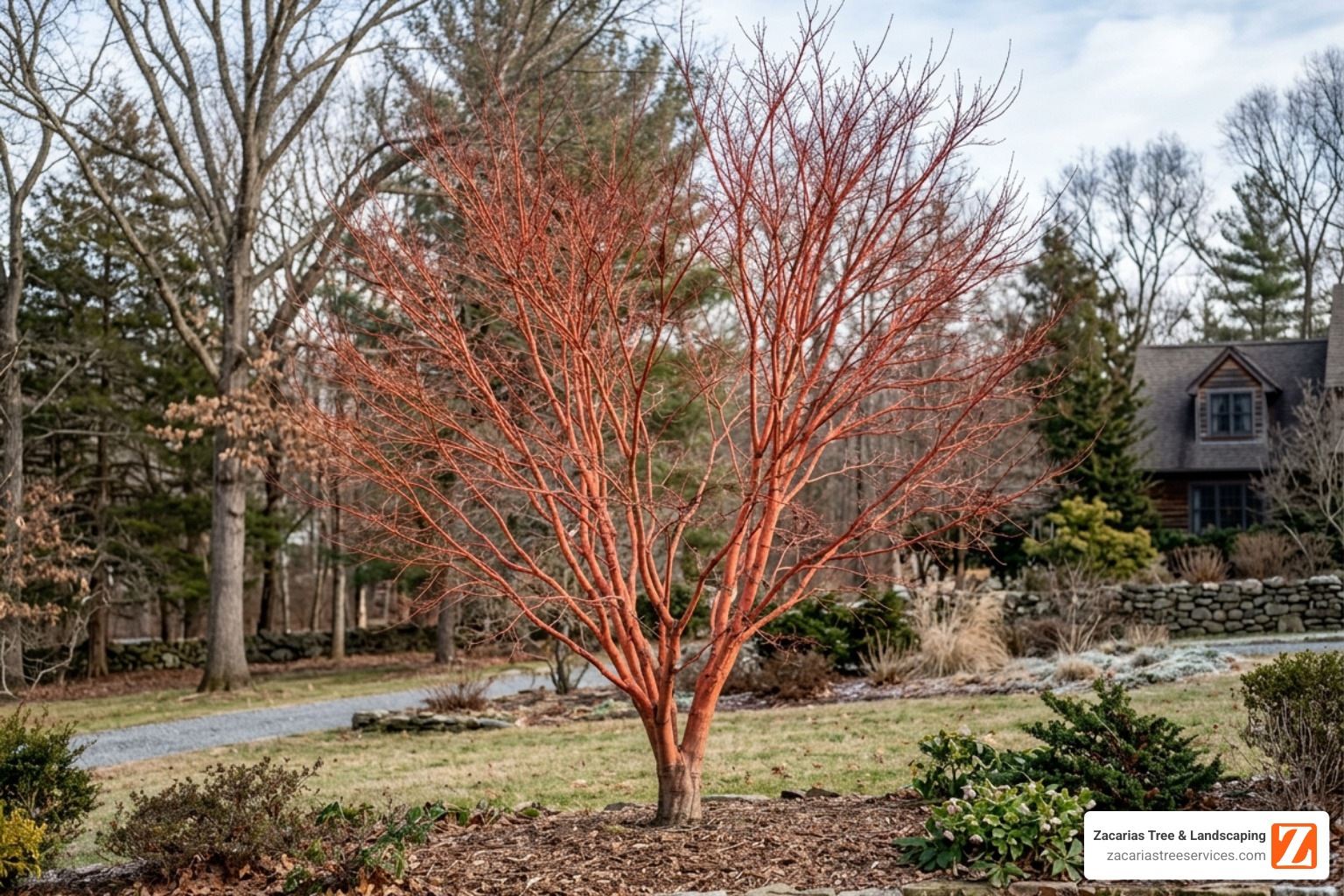
One of the most common questions we hear at Zacarias Tree & Landscaping is: “How big will this tree actually get?” While some sources categorize it as a small tree, it can reach impressive heights if given enough time and the right conditions.
In the first decade, you can expect a moderate growth rate. Young trees often grow up to 2 feet per year, though they eventually settle into an average of 1 foot of growth annually. While it is often listed as reaching 20 to 25 feet, older specimens in ideal Massachusetts conditions have been known to exceed 30 feet after 40 years.
| Age / Stage | Typical Height | Typical Spread |
|---|---|---|
| 10 Years | 16–18 feet | 8–10 feet |
| 20 Years | 20–25 feet | 15–20 feet |
| 40+ Years | 30+ feet | 15–25 feet |
Despite its height, the acer sango kaku maintains a relatively narrow canopy compared to other maples. Its spread usually stays between 15 and 20 feet, making it an excellent choice for tighter spaces or as a vertical accent near property borders. More information on its structural characteristics can be found at Acer palmatum ‘Sango Kaku’ | Landscape Plants | Oregon State University.
The magic of the acer sango kaku is its ability to change its “outfit” every few months. It is truly a four-season performer:
It is important to note that the most intense color is found on “juvenile wood”—the growth from the current and previous year. This is why maintaining the health of the tree through proper trimming is essential for maximizing winter color.
For homeowners in our Massachusetts service areas—from Acton to Woburn—the acer sango kaku is generally hardy and reliable. It thrives in USDA Zones 5 through 8, which covers most of our region. However, because our winters can be harsh and our summers humid, site selection is key.
This tree prefers moist, organically rich, and slightly acidic soil. It does not like “wet feet,” so well-drained loam is a must. If your yard has heavy clay or poor drainage, we often recommend planting the tree on a slight mound to ensure the root ball stays oxygenated.
When it comes to caring for the root zone, mulching is your best friend. A thick layer of organic mulch helps retain moisture and keeps the roots cool during the heat of July. If you need help preparing a site or choosing the right specimens, you can find more info about tree planting services or check out our guide on mulching and soil care.
The “perfect” spot for an acer sango kaku is a balance of light and protection.
Pruning is both an art and a science with the coral bark maple. To keep the tree healthy and the bark bright, we suggest pruning in the dormant season (late fall to mid-winter). Pruning during the spring or summer can cause the tree to “bleed” sap, which stresses the plant and attracts pests.
At Zacarias Tree & Landscaping, we focus on removing dead, diseased, or crossing branches to maintain that elegant vase shape. For those looking to maximize winter color, light thinning can encourage the growth of new, bright red twigs. You can learn more about our approach to tree trimming and pruning to see how we handle these delicate specimens.
Regarding fertilization, a slow-release, low-nitrogen fertilizer in early spring (before the leaves emerge) is usually all the tree needs. Avoid late-season fertilizing, as you don’t want to encourage new, soft growth right before a Massachusetts frost.
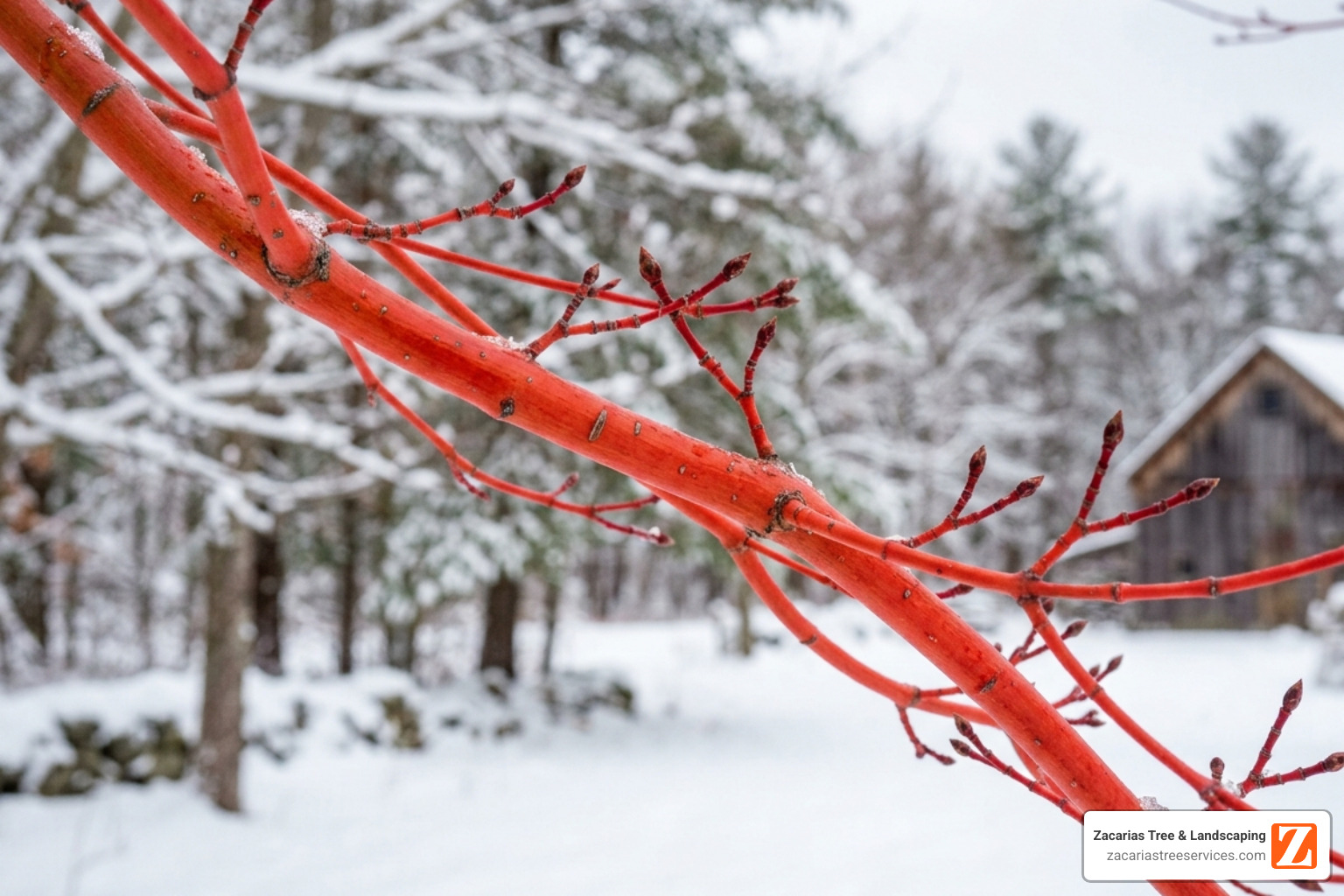
While the acer sango kaku is a hardy cultivar, it isn’t invincible. The most significant threat is Pseudomonas syringae (bacterial blight). This often appears as blackening of the tips of young shoots, especially during cold, wet springs.
Another concern is Verticillium wilt, a soil-borne fungus that can block the tree’s vascular system. The best defense against these issues is prevention:
Common garden pests like aphids, scale, and mites can occasionally target the foliage. Most of these can be managed with a strong blast of water or horticultural oils. For more technical details on identifying these issues, the Missouri Botanical Garden Plant Finder is an excellent resource.
The acer sango kaku is a “specimen” tree, meaning it is beautiful enough to stand alone as a focal point. However, it truly shines when paired with the right companions. Because of its gold fall color and red winter bark, we recommend pairing it with plants that provide contrast:
Its architectural shape makes it a favorite for city gardens, courtyards, and even large containers on patios. It adds height without taking up massive amounts of horizontal space, making it perfect for suburban lots in towns like Billerica or Framingham.
It is generally considered a moderate grower. In its youth, it can put on 1 to 2 feet of height per year. As it approaches maturity, this slows down to about 1 foot per year. It typically reaches its full height of 20–25 feet within 20 years.
Yes, the brilliant red color is a characteristic of young wood (1st and 2nd-year growth). As the branches age and get thicker, the bark turns a more traditional grayish-brown. This is why regular, professional pruning is helpful—it encourages the tree to produce new, colorful stems every year.
Generally, yes. While no plant is 100% “deer-proof” if the animals are hungry enough, Japanese maples are typically not a preferred food source. Rabbits and squirrels may occasionally nibble on seeds or young bark, but the tree is usually quite resilient to wildlife.
The acer sango kaku is more than just a tree; it’s a year-round art installation for your yard. From the delicate pinks of spring to the golden hues of autumn and the fiery red “coral” of winter, it provides a level of interest that few other species can match.
At Zacarias Tree & Landscaping, we specialize in helping Massachusetts homeowners select, plant, and maintain these beautiful specimens. Whether you are in Andover, Newton, or anywhere in our extensive service area, we provide the rapid response and expert care your landscape deserves. If you’re ready to add a “coral tower” to your garden or need professional pruning to keep your existing maple vibrant, we are here to help. Explore more info about our tree services and let us help your landscape thrive in every season.
Need a pro? Zacarias Tree & Landscaping provides licensed, insured, and expert care across Lynn, Essex, and Middlesex Counties.
We live by a simple promise: Clear scope. Clear plan. Clean finish.
From emergency removals to seasonal landscaping, we’ve been Lynn’s trusted choice since 2002. Safety-first standards. Total site cleanup. Every time.